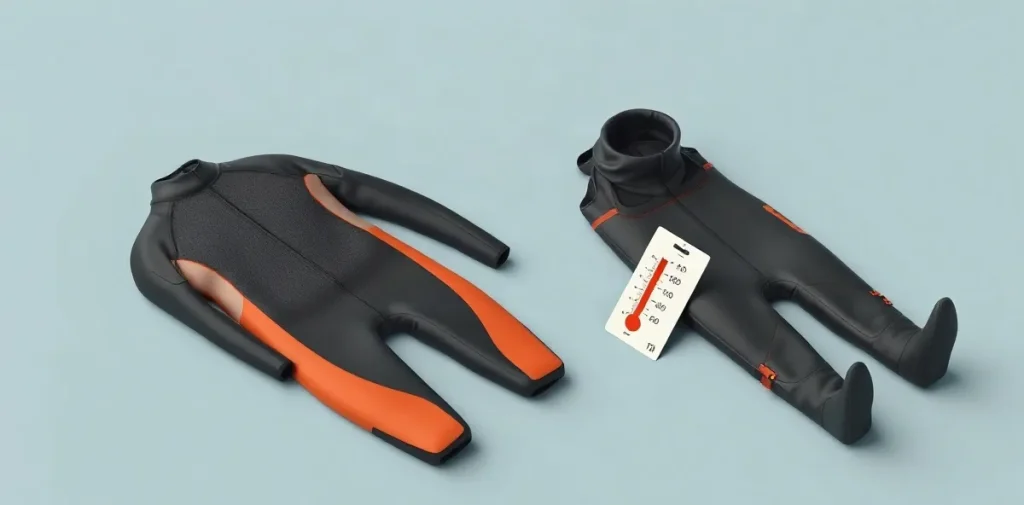
A wetsuit usually costs less over time if you dive only in warm water. A drysuit costs more to buy and maintain, but may be the cheaper choice if you dive often in cold conditions.
The comparison depends on more than the purchase price: how often you dive, the water temperature, and the suit’s upkeep all affect the total. A wetsuit relies on a close fit and a thin layer of water for insulation; a drysuit keeps water out and requires compatible undergarments.
For occasional warm-water dives, a wetsuit is the simpler, lower-cost option. If cold water keeps you diving regularly, weigh the higher costs of a drysuit against the value of staying warm and comfortable over many dives.
| Criterion | Wetsuit | Drysuit |
|---|---|---|
| Purchase price | Farmer John styles start at under $100 | Starts at several hundred dollars; can exceed $1,000 |
| Thermal system | Traps a thin layer of water against the body | Keeps water out; uses insulating undergarments |
| Buoyancy | Neoprene compresses with depth | Suit gas affects buoyancy and needs management |
| Potential service life | May need replacing or recycling after five years | 15–20 years or more with proper care |
| Additional ownership needs | Fit and thickness suited to conditions | Seal, zipper and valve care; compatible undergarments |
- under $100 Starting price stated for a Farmer John wetsuit
- 15–20 years or more Potential lifespan of a well-maintained drysuit
- 4.3°C Water temperature exposure in the cold-water study
- 34–35 °C Human thermoneutral range
Which costs less to buy: a wetsuit or a drysuit?
A wetsuit costs less to buy at the entry level: a Farmer John can start at under $100, while drysuits start at several hundred dollars and can exceed $1,000.
- Farmer John wetsuit: The lower initial price can make it a practical way to try cold-water diving before you know how often you will go.
- Premium wetsuit: It can cost as much as an entry-level drysuit, so compare the exact models rather than assuming every wetsuit is cheaper.
- Drysuit setup: Add the insulating layers worn underneath. Comparing suit prices alone understates the initial outlay for a drysuit.
Price is only part of the cold-water comparison
In a study of cold-water dives, water temperature exposure was 4.3°C; the drysuit group’s core-skin temperature was 37.5 ± 0.7°C versus 36.2 ± 0.7°C in the wetsuit group (p = 0.004). That temperature result is relevant when weighing the purchase cost against thermal protection, but it does not tell you what a particular suit or full setup will cost.
If you are testing whether cold-water diving will become a regular activity, the wetsuit’s lower starting price may reduce the risk of buying equipment you rarely use. Compare the exact suit models and include the drysuit’s insulating layers before deciding which initial outlay fits your budget.
When does the insulation difference matter most?
The insulation difference matters most when the water is colder than the thermoneutral range for humans, 34–35 °C—a range below which SCUBA divers are often exposed during diving.
- Wetsuit: Neoprene traps a thin layer of water against your body, which warms it. How much insulation you get depends on the suit’s fit and material thickness.
- Drysuit: The shell keeps water out; insulating undergarments provide warmth. You can adjust those layers for different conditions without changing the shell.
What a cold-water comparison shows
In a cold-water study with exposure at 4.3°C, core-skin temperature was 37.5 ± 0.7°C in the drysuit group and 36.2 ± 0.7°C in the wetsuit group (p = 0.004). The measured difference illustrates why the insulation system matters in cold water; it does not establish that every drysuit will keep every diver warmer.
For your own dives, consider water temperature alongside fit and the undergarments you can wear. A wetsuit’s insulation depends on its thickness and how closely it fits; a drysuit’s depends on the insulating layers beneath the shell.
How do buoyancy and mobility affect the choice?
A wetsuit and a drysuit affect buoyancy and movement differently: neoprene compresses as you descend, while a drysuit’s buoyancy changes with the gas you add to it.
- Wetsuit: Neoprene becomes thinner under pressure, reducing both insulation and buoyancy as the dive progresses. Your buoyancy changes with depth, so you may need to adjust your buoyancy compensator.
- Drysuit: Gas added to the suit helps prevent squeeze and affects buoyancy. You must manage that gas alongside inflation of your buoyancy compensator; the two controls work together.
- Movement: A close-fitting wetsuit can be easier to move in. A drysuit’s extra material and undergarments may restrict movement if the suit does not fit properly.
Fit affects more than comfort: it influences thermal protection and control in the water. Try the suit with the undergarments, exposure protection and equipment you will actually use. Check that you can reach your controls, bend and move your arms without the suit pulling or bunching; a fitting that feels fine without your full setup may not work as well on a dive.
What maintenance changes the lifetime cost?
A drysuit can cost less over time than a wetsuit if you dive often, because a well-maintained drysuit can last 15–20 years or more and may retain resale value, while a wetsuit may need replacing or recycling after five years.
Frequency of use changes the comparison: a wetsuit that sees regular dives may reach replacement sooner, while a drysuit’s longer service life can spread its higher purchase cost across more seasons. Resale value may offset some of that cost, but depends on the suit’s condition and buyer demand.
What upkeep adds to the calculation
Drysuit care includes checking seals, zippers and valves. Each part helps keep water out; damage to a sealing component can compromise dryness and may require repair or replacement. Before buying, check the cost and availability of repair services and replacement parts for the suit you are considering.
For either suit, rinse away salt after use, dry it fully and follow the maker’s care instructions. Those steps help limit avoidable wear, but they do not remove the drysuit’s additional maintenance needs.
When is the cheaper suit the wrong choice?
A cheaper wetsuit is the wrong choice when the dives you actually make leave you cold enough to lose comfort or dexterity, or when it cannot provide suitable protection for the water and time spent in it.
Water temperature matters, but it is not the only test. A short dive and repeated, longer exposure can feel very different, and divers vary in how readily they get cold. If cooling makes it harder to handle equipment, the lower purchase price may come with a real cost to the dive.
- Dive frequency: Regular cold-water diving may make a drysuit’s higher initial cost more useful than it is for occasional exposure.
- Exposure time and cold tolerance: Consider how long you stay in the water and whether you remain comfortable and dexterous in a wetsuit.
- Safe use: A drysuit adds a system you must practise controlling, including the gas inside the suit. Its extra protection is not a reason to skip training.
A diver who rarely encounters cold water may not get enough benefit from a drysuit to justify its added cost and learning demands. Conversely, choosing a wetsuit simply because it costs less can be a poor trade if cold limits the dives you can comfortably make.
If you are unsure, ask about local conditions and suitable training, then compare ownership costs—not just the price at purchase.
How should you compare the total cost?
Compare the total cost by weighing the wetsuit’s lower purchase price and simpler setup against how often you will use a drysuit’s added protection and what it costs to maintain.
- Occasional warm-water diving: A wetsuit is often the practical choice when you dive infrequently in warm conditions. Its lower upfront cost and simpler setup make it easier to justify than a drysuit system.
- Frequent cold-water diving: Include the drysuit’s purchase and maintenance costs, plus the price of suitable undergarments and service parts. A drysuit may last longer and retain resale value, but those potential savings depend on care, condition and whether you can sell it.
Service life is not guaranteed: follow the manufacturer’s care and repair guidance, and assess the suit’s condition rather than assuming it will last a particular number of years. A wetsuit may also need replacing, so compare replacement plans as well as the initial price.
Before buying, check current prices for the specific wetsuit or drysuit, the drysuit undergarments you would use, and compatible service parts. The deciding question is whether you will dive in conditions that require the drysuit often enough to justify the full system’s purchase and upkeep.
Frequently asked questions
Is a drysuit always more expensive than a wetsuit?
Which suit is cheaper over several years?
Does a drysuit keep a diver warmer?
Does a drysuit require different buoyancy skills?
Key takeaways
- A Farmer John wetsuit can start at under $100; drysuits start at several hundred dollars and can exceed $1,000.
- A premium wetsuit may cost as much as an entry-level drysuit.
- A wetsuit may need replacing or recycling after five years; a well-maintained drysuit can last 15–20 years or more.
- For frequent cold-water dives, include undergarments, maintenance and drysuit buoyancy practice in the cost comparison.
Sources
- Aqua Bound — “Do You Need a Wetsuit or Drysuit for Paddling?”
- tdisdi.com — “6 Key Differences in Diving a Dry Suit vs a Wetsuit”
- PADI Blog — “What’s the Difference Between a Wetsuit and a Dry Suit?”
- Elite Watersports — “Wet Suit vs Dry Suit: Which is Best for Watersports?”
- Bending Branches — “Wetsuit or Drysuit for Cold Water Kayaking and Canoeing?”