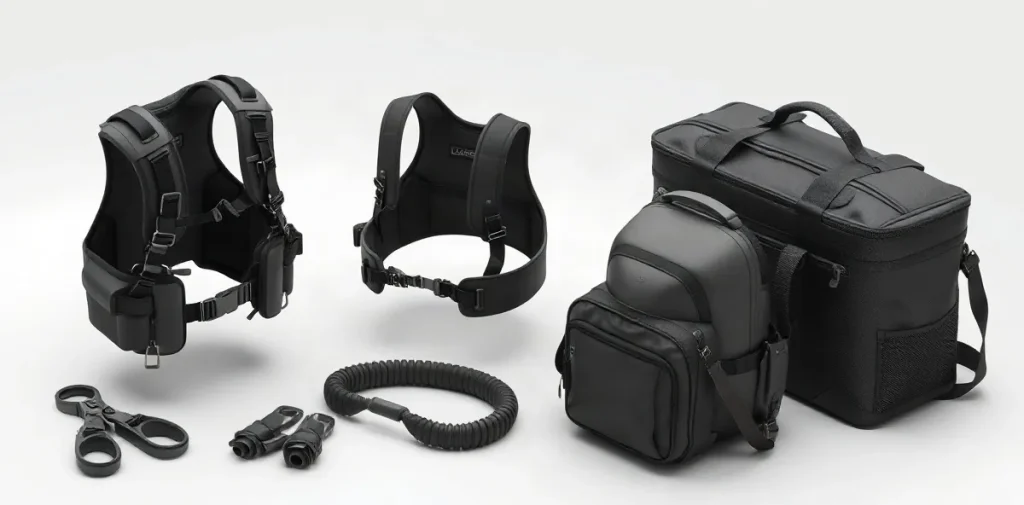
A conventional BCD and a backplate-and-wing both provide buoyancy control; the main difference is how they’re built and worn. A BCD integrates the buoyancy bladder with a vest-style harness, while a backplate-and-wing places the bladder behind the diver and attaches it to a separate plate and harness.
That difference can affect fit, trim, comfort and how easily the equipment can be adapted to different dives. In this comparison, we’ll look at the practical trade-offs to help you decide which setup suits your needs.
| Criterion | Traditional jacket BCD | Backplate and wing |
|---|---|---|
| Buoyancy position | Some buoyancy under the arms | Wing behind the diver |
| Configuration | Traditional BCD design | Separate backplate, harness and wing |
| Stated strength | Simplicity and comfort | Customisation, trim and balance |
| Best fit described | Recreational divers seeking a straightforward option | Experienced recreational and technical divers |
| Price and travel figures | Not provided | Not provided |
- 3 components The backplate, harness and wing named in the BPW description; a component count, not a performance statistic.
How does a jacket BCD differ from a backplate and wing?
A jacket BCD places some of its buoyancy beneath the diver’s arms, while a backplate and wing (BPW or BP/W) puts the buoyancy behind the diver. The BPW combines three parts: a backplate, a harness and an air cell called a wing.
- Jacket-style BCD: buoyancy sits partly under the arms. “Jacket” describes this configuration, not every type of BCD.
- Backplate and wing: the backplate and harness support the setup, while the wing provides buoyancy behind the diver.
- Other BCD configurations: “BCD” is a broad term for buoyancy-control equipment; “rear-inflate” and “back-inflate” describe configurations distinct from jacket-style designs.
Compare the equipment’s construction and fit rather than relying on its label. A jacket-style BCD and a back-inflate BCD are distinct types, so “back-inflate” alone does not mean the equipment is a BPW. Look at where the air cell sits and whether the system uses a separate backplate and harness; those features distinguish the designs.
Which system is more adjustable as your diving changes?
A backplate-and-wing (BPW) system is more adjustable as your diving changes because its backplate, harness and buoyancy wing are separate components that can be configured for different conditions and equipment. That modularity can make a BPW a practical long-term system if you expect your gear setup to evolve; it does not, by itself, guarantee that parts from different systems will fit together.
Modular BPW
With a BPW, assess the compatibility of the three core components before buying: the backplate, the harness and the wing. Check that the proposed combination suits the cylinders and other equipment you intend to use, and compare the full quoted cost of those components rather than judging the system by one part.
- BPW: separate backplate, harness and wing offer options to change the configuration as diving conditions or gear change.
- Traditional BCD: an integrated unit is a simpler choice; check how its specific model fits and what adjustments it provides.
Integrated jacket BCD
A traditional jacket BCD combines its main components in one unit, so it may suit divers who prefer a less modular setup. Fit and adjustability vary by model, and the supplied information names no manufacturer, model or price. Compare the actual BCD’s fit and adjustment range with the BPW components’ compatibility and quoted total cost before choosing.
What changes in fit, trim and comfort underwater?
A backplate-and-wing (BPW) can help a diver hold streamlined trim by placing its buoyancy behind the body, but the benefit depends on a correctly fitted harness and a configuration suited to the diver’s equipment. A jacket-style BCD distributes some buoyancy under the arms, so it feels different from a BPW wing, whose air cell sits behind the diver.
- BPW: The backplate holds the cylinder on the diver’s back, while the rear-mounted wing provides buoyancy; check that the harness fits and the cylinder and other equipment remain secure in position.
- Jacket-style BCD: Buoyancy around the arms gives a different feel and may be simpler and more comfortable for recreational diving. Personal comfort varies, so neither layout is a universal fit.
Check the fit in your usual kit
Try either system with the exposure protection and cylinders you normally dive with. Check the harness fit and whether the equipment stays in place as you move; a BPW’s potential trim advantage is only useful if the complete setup fits and feels stable underwater.
Is a BPW or jacket BCD easier to travel with?
A backplate-and-wing (BPW) is not automatically easier to travel with than a jacket BCD: its separate backplate, harness and wing can be packed as components, but modularity alone does not show that the complete setup is lighter or takes up less space.
The available comparison provides no system weights, packed dimensions, airline baggage limits or travel fees, and no model-specific travel comparison for a traditional BCD. A jacket BCD may suit straightforward recreational diving, but that general appeal is not evidence that a particular jacket model is easier or cheaper to fly with than a particular BPW.
- BPW: Measure the packed backplate, harness, wing and any other equipment you plan to carry together; separating the parts does not establish a smaller packed volume.
- Jacket BCD: Measure the actual unit packed for your trip; there is no model-specific weight or size here to compare against a BPW.
- Either setup: Check those measurements and the complete packed weight against the airline allowance that applies to your booking, including any relevant fee.
When is the extra complexity of a BPW a poor fit?
A backplate and wing is a poor fit when a diver wants a simple recreational setup and does not want to choose and adjust separate components. Its customisable backplate, wing and harness offer configuration options; a traditional BCD may suit divers who prioritise a straightforward setup instead.
Common selection mistake
Do not treat a BPW as a universal upgrade or assume that a wing automatically improves trim. The system is especially suited to experienced recreational and technical divers, but fit, adjustment and the complete gear configuration all affect how it sits and performs.
- Choose a traditional BCD if simplicity for recreational diving matters more than configuring separate components.
- Consider a BPW if you are comfortable choosing and adjusting a backplate, wing and harness for your diving.
- Check the whole setup before expecting a trim benefit: assess fit, adjustment and how the rest of your gear is configured.
- Compare like for like by getting quotes for the actual components you would buy; no prices or named models are provided here, so a price-based value verdict is not justified.
How should you choose between these buoyancy systems?
Choose a traditional BCD for straightforward recreational diving when simplicity and comfort are your priorities; consider a backplate and wing (BPW) when you want rear-distributed buoyancy and a system you can customise as your equipment changes. Neither system is a universal best choice: the right fit depends on how you dive and how the assembled gear feels in the water.
- Traditional BCD: Its familiar, integrated design makes it a practical starting point for simple recreational use, especially if you value comfort over a modular setup.
- BPW: The separate backplate, wing and harness let you configure the system around your equipment and preferences. Its buoyancy sits behind you, so assess how that distribution affects your trim with your usual cylinders and other gear.
Test the complete setup
Try on the exact BCD or BPW you are considering, rather than judging by the system type alone. Check harness fit on your body, then assess buoyancy distribution and trim in the water using your normal equipment; a comfortable fit on land does not establish how the setup will balance underwater.
Compare the complete purchase cost and the assembled system’s travel measurements before deciding. The available source material establishes no prices, weights or universal best choice, so treat those as items to verify for the specific setup—not as assumed advantages of either system.
Frequently asked questions
Is a backplate and wing the same as a BCD?
Does a wing always give better trim?
Is a jacket BCD better for recreational diving?
Is a backplate and wing cheaper?
Key takeaways
- A BPW combines a backplate, harness and wing; a jacket-style BCD has buoyancy under the arms.
- Rear buoyancy can support trim, but fit and configuration still matter.
- Traditional BCDs emphasise simplicity and comfort; BPWs emphasise customisation.
- No prices, weights or packed dimensions are provided, so compare actual models before buying.
Sources
- JoeScuba LLC — “Choosing a Backplate & Wing for Recreational Diving”
- divein.com — “6 Best Backplate and Wing Systems Tested 2026 – divein”
- lovesparkscuba.com — “UNDERSTANDING THE DIFFERENT TYPES OF BCDs”
- girlsthatscuba.com — “Wing vs Jacket BCD – How to Choose the Best BCD For You”
- rayscubadiving.com — “Choosing the Right BCD”
