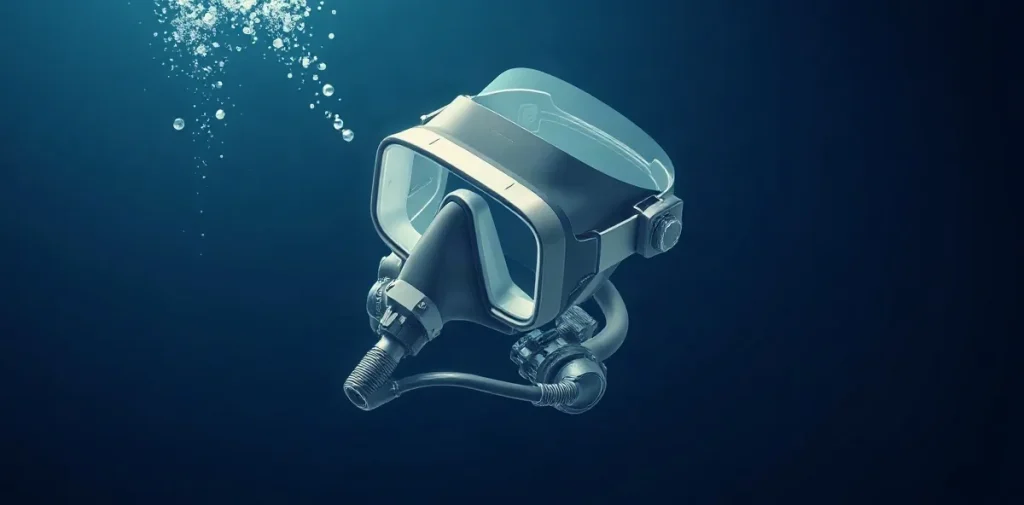
Evaluating a diving bandmask means examining how a face-worn breathing system performs as part of a diver’s complete underwater equipment. Fit, breathing, visibility, communication and reliability all affect its practical use; testing these together helps identify design questions that matter in working and scientific diving.
What makes a bandmask a system rather than a mask?
A bandmask covers the face and connects the diver to a breathing-gas supply. Unlike a simple face mask, it is part of an assembly that may include a regulator, gas hose, communications equipment and supporting headgear. Its performance depends on how these parts work together and on the diver’s ability to operate them underwater.
The broad research area is human–equipment performance in underwater breathing systems. A device can function mechanically yet prove difficult to don, adjust, clear or use while carrying out a task. Evaluation therefore considers both engineering behaviour and the demands placed on the wearer.
Which performance questions matter underwater?
One central question is whether the breathing system supplies gas comfortably across the conditions for which it is intended. Breathing resistance, regulator response, leaks and the effect of movement are relevant considerations. These factors can influence workload, especially when a diver is exerting effort or working at depth, where gas density and environmental pressure affect breathing.
Fit and sealing matter too. A poor seal can admit water or compromise comfort; pressure points and restricted movement can distract the diver. Visibility, access to controls, compatibility with other equipment and the ability to communicate are also practical parts of the evaluation.
- Breathing performance: how readily gas is delivered during inhalation and exhalation.
- Fit and sealing: whether the mask remains stable and limits unwanted water entry.
- Usability: whether the diver can adjust, clear and manage the equipment while submerged.
- Integration: how the mask works with gas supply, communications and other worn equipment.
- Reliability: whether the system continues to function as intended during its operational use.
How are diving systems evaluated?
Equipment assessment generally combines inspection, controlled testing and trials involving divers. Bench tests can examine components and breathing behaviour under defined conditions. Practical trials add the effects of fit, movement, workload and task demands that cannot be fully represented by inspecting hardware alone.
A useful evaluation defines the equipment configuration and the conditions being examined, then considers performance across relevant tasks. Results from one setting do not automatically transfer to another: depth, workload, gas supply, water conditions, diver experience and equipment compatibility can all change how a system behaves. Repeatable procedures help make comparisons more meaningful.
For a bandmask, researchers may therefore ask not only whether it supplies breathing gas, but whether the diver can use it effectively while maintaining orientation, communicating and completing work. The precise test plan depends on the intended role of the equipment.
Why does this work matter to divers and clinicians?
For divers, equipment that fits poorly or adds breathing effort can increase task burden and reduce attention available for navigation, communication and team coordination. A mask that admits water or is awkward to manage also creates an operational problem, even if its components pass isolated checks.
Diving physicians and hyperbaric clinicians encounter the health consequences of diving, including problems linked to workload, breathing and equipment use. Understanding the system helps place symptoms and incidents in context, but equipment evaluation does not replace clinical assessment. A diver with health concerns should consult a physician experienced in diving medicine.
Scientific divers and other working divers may also depend on reliable communication and hands-free task performance. Their needs make it important to assess the complete arrangement, not just the breathing mechanism in isolation.
Where does bandmask evaluation fit in diving research?
Bandmask testing belongs to a wider field that studies how people and equipment function under pressure. It sits alongside research on breathing apparatus, gas delivery, diver workload, underwater communication and the practical control of risk. These questions connect engineering choices with physiology and operational practice.
The area is especially relevant when equipment is used for sustained work or in configurations different from ordinary recreational scuba. No single performance measure captures every use case. When selecting or assessing a system, check its intended operating conditions, approved configuration and maintenance requirements with the responsible provider.
Frequently asked questions
What is a diving bandmask?
Why test a mask with divers rather than on a bench alone?
Does a bandmask evaluation establish whether it is right for every diver?
An original research-library explainer written by the Rubicon editors. It is not a summary of a specific publication.