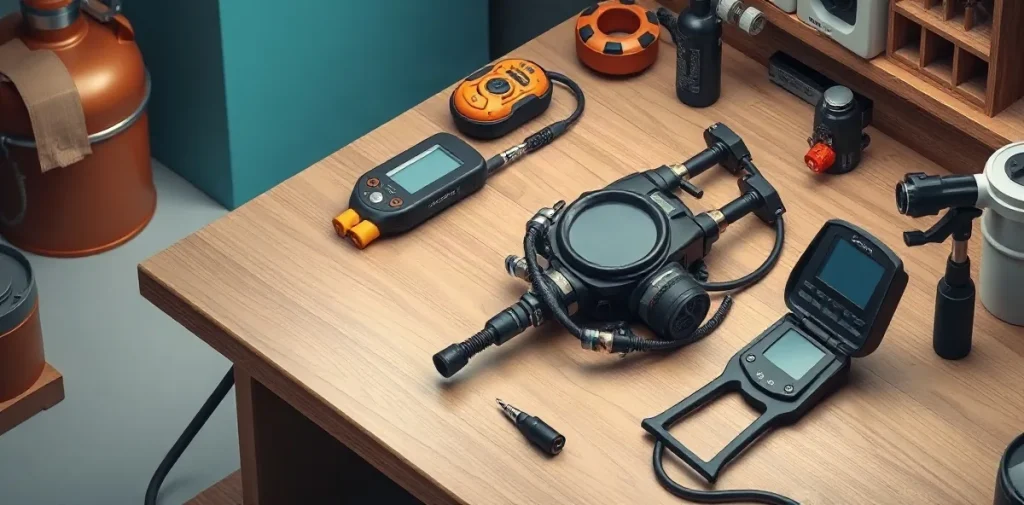
Choosing, maintaining, and innovating scuba diving equipment safely requires understanding the specific functions of each component, regularly inspecting and servicing gear, and adopting new technologies with proven reliability and compatibility. Proper equipment management ensures diver safety, optimal performance, and extends the lifespan of costly underwater apparatus.
Scuba diving equipment is the foundation of safe underwater exploration, making informed choices and diligent upkeep essential. This article guides divers through selecting gear tailored to their diving style and environment, explains maintenance best practices to prevent failures, and explores recent innovations that enhance safety and comfort. Whether you are a beginner or an experienced diver, mastering equipment management is key to confident and secure diving.
For a comprehensive understanding of diving principles and safety measures, see our detailed overview in «Diving Fundamentals: An Authoritative Guide to Underwater Exploration and Safety». This article builds on that foundation by focusing specifically on gear selection, care, and technological advancements essential for every diver’s dive bag.
| Model | Price (USD) | Max Operating Depth | Special Features |
|---|---|---|---|
| Atomic Aquatics T3 | 1,200 | 100 m | Cold-water optimized, easy maintenance |
| Scubapro MK25 EVO | 1,000 | 80 m | Balanced diaphragm, high flow rate |
| Apeks XTX50 | 950 | 90 m | Durable, good for technical diving |
| Cressi XS Compact | 650 | 60 m | Lightweight, compact design |
- 50 meters Minimum depth regulators must safely operate per EN 250:2014
- 7 kilograms Minimum buoyancy aid capacity as per ISO 12402-5:2020
- 100 dives or 12 months Recommended regulator service interval
- 300 liters/min Minimum breathing gas flow rate from regulators under EN 250:2014
How do I select scuba regulators and what are current top models in 2026?
Key regulator features
Choosing a scuba regulator requires prioritizing reliability, breathing ease, and environmental suitability. The Atomic Aquatics T3, priced around $1,200, is highly regarded for cold-water diving due to its robust construction and straightforward maintenance. Meanwhile, the Scubapro MK25 EVO, retailing near $1,000, features a balanced diaphragm design that ensures consistent airflow and performance across various depths and conditions.
- Atomic Aquatics T3: cold-water reliability, ease of maintenance, ~$1,200
- Scubapro MK25 EVO: balanced diaphragm system, consistent airflow, ~$1,000
- Material and corrosion resistance: crucial for longevity and safety
- Breathing effort: low work of breathing reduces diver fatigue
- Ease of servicing: modular design facilitates routine maintenance
Standards for safety
Regulator performance and safety are governed by the EN 250:2014 standard, which requires regulators to provide breathable air at depths down to 50 meters with a minimum continuous flow rate of 300 liters per minute. Compliance with this standard ensures adequate performance under demanding dive conditions, serving as a baseline for evaluating models in 2026.
- EN 250:2014: minimum flow rate 300 l/min at 50 m depth
- Depth rating: regulators must reliably function at least to 50 meters
- Flow consistency: uninterrupted breathable air supply under stress
- Tested for both cold- and warm-water conditions
What should I know about selecting buoyancy control devices (BCDs) for different dive styles?
Technical vs recreational BCDs
Selecting a BCD depends primarily on your dive style, with technical divers favoring back-inflation wings for streamlined trim and modular customization, while recreational divers prioritize comfort and integrated weight systems. For example, the Mares Horizon BCD, priced around $550, features a back-inflation wing suited for technical diving and offers modular accessories to adapt to complex dive configurations. In contrast, the Cressi Start BCD, costing about $300, is designed for recreational use, emphasizing ease of use and comfort with integrated weight pockets that simplify buoyancy adjustments.
Safety buoyancy standards
When choosing a BCD, it is essential to consider safety standards such as ISO 12402-5:2020, which sets minimum buoyancy requirements for surface support buoyancy aids at 7 kg. Ensuring your BCD meets or exceeds these standards helps provide reliable flotation in emergencies. This standard applies broadly to buoyancy aids but informs safe BCD selection by indicating the minimum lift needed to keep a diver safely afloat at the surface.
How do dive computers enhance diver safety and what are the latest technological advances in 2026?
Dive computers enhance diver safety by providing continuous, real-time monitoring of depth, time, and decompression status, allowing divers to avoid decompression sickness through precise adherence to safe ascent profiles. In 2026, advancements such as multi-gas support and integrated air monitoring further improve risk management underwater.
Latest dive computer features
- Garmin Descent G1: Released in early 2026, this model supports multiple gas mixes and features real-time air integration, retailing near $900, enabling divers to track breathing gas consumption accurately during dives.
- Suunto D6i Novo: Priced around $700, it offers a compact wrist-size design with Bluetooth connectivity for effortless dive log synchronization, streamlining dive data management and post-dive analysis.
Decompression algorithms
Modern dive computers in 2026 primarily employ the Bühlmann ZHL-16C algorithm enhanced with adjustable gradient factors, allowing divers to tailor decompression models to personal risk tolerance and diving conditions. This customization promotes safer ascent profiles by balancing tissue saturation limits with conservatism based on individual preferences.
What are best practices for scuba equipment maintenance to ensure reliability and lifespan?
Routine post-dive care
Maintaining scuba gear reliability and lifespan begins with thorough post-dive care, including rinsing all equipment in fresh water and drying it in the shade to prevent corrosion and material degradation. For example, thoroughly rinsing regulators, BCDs, wetsuits, and masks after every dive removes salt, sand, and contaminants that accelerate wear. Proper drying in shaded, ventilated areas avoids UV damage, which can reduce neoprene wetsuit elasticity and BCD bladder integrity over time.
- Rinse all gear with fresh water immediately after each dive.
- Dry equipment in shade to avoid UV exposure and fading.
- Store BCDs partially inflated to maintain bladder shape and prevent creasing.
- Avoid direct sunlight during storage to reduce material breakdown.
Professional servicing essentials
Annual servicing of regulators by certified technicians is essential for safety and reliability, with typical costs ranging from $100 to $150. This service includes disassembly, inspection, cleaning, and replacement of worn parts such as O-rings and diaphragms. For instance, the Aqua Lung Legend regulator model requires certified annual maintenance to maintain performance and warranty compliance. Neglecting this can lead to malfunction or increased breathing resistance underwater.
- Schedule regulator service yearly with certified technicians.
- Expect servicing costs between $100 and $150.
- Follow manufacturer-specific maintenance recommendations, e.g., Aqua Lung Legend.
- Replace parts proactively based on technician inspection to prevent failures.
What are the trade-offs and common mistakes in choosing and maintaining diving equipment?
Cost vs reliability
Choosing diving equipment under $300 often means compromising on durability and advanced safety features, which can increase long-term expenses and risks. Entry-level regulators like the Mares XR1 typically retail around $250 but may lack corrosion-resistant materials found in models exceeding $600, such as the Scubapro MK25 EVO. Budget buoyancy compensators (BCDs) priced below $300 frequently use lighter fabrics and simpler inflator mechanisms, raising the likelihood of wear or malfunction during dives. These cost savings can lead to more frequent replacements or repairs, ultimately raising total ownership costs well beyond the initial purchase price.
Maintenance neglect consequences
Failing to service regulators regularly significantly raises malfunction risks, with free-flow or failure incidents rising sharply after three years without professional maintenance. Industry guidelines advise servicing regulators every 12 months or after 100 dives to prevent issues. Overinflating BCDs, a common error in buoyancy control, can cause dangerously rapid ascents, increasing the risk of decompression sickness. Proper training on buoyancy management, as outlined by agencies like PADI and NAUI, emphasizes controlled inflation and deflation to maintain neutral buoyancy and avoid ascent rates exceeding 9 meters per minute, a threshold linked to safer decompression profiles.
Frequently asked questions
How often should I service my scuba regulator?
Can I use one BCD for both recreational and technical diving?
Are wrist dive computers reliable compared to console models?
What is the main benefit of the latest dive computer decompression algorithms?
Key takeaways
- Select regulators meeting EN 250:2014 for deep dive reliability
- Match BCD buoyancy and features to your diving style and ISO 12402-5:2020 safety limits
- Use dive computers supporting multi-gas and real-time air monitoring for safer dives
- Follow strict post-dive cleaning and annual servicing for all scuba equipment
- Beware of false economy in low-cost gear and maintenance neglect