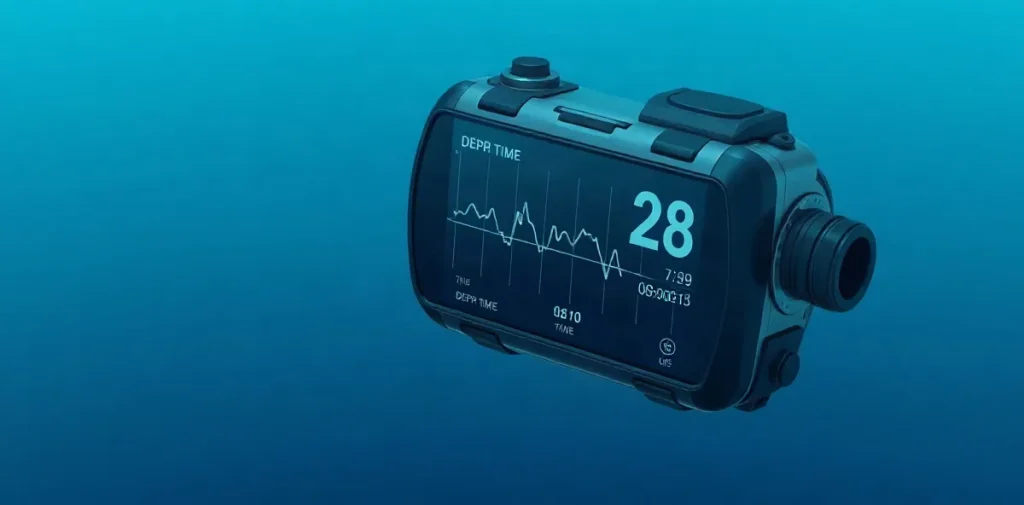
Dive computers turn a changing depth profile into a running estimate of decompression status. Their research area spans sensors, algorithms, human decisions and validation: how should a device represent exposure, communicate risk and support safe diving when real profiles depart from a planned schedule?
What does a dive computer actually calculate?
A computer records depth over time and applies a decompression model to estimate how inert gas moves between the lungs, blood and body tissues. Because pressure rises with depth, breathing gas at depth increases the pressure driving inert-gas uptake; during ascent, the direction of that exchange reverses.
Most models represent the body as theoretical tissue compartments that absorb and release gas at different rates. These compartments are calculation tools, not literal maps of particular organs. The computer uses them to estimate when an ascent or stop is required, based on the diver’s exposure and the model’s assumptions.
That estimate is not a direct measurement of bubbles or an individual diver’s tissue state. It is a model-based guide, dependent on accurate depth and time data, correct settings and a profile within the device’s intended use.
Why is a computer different from a dive table?
A table is built around specified depth-and-time schedules. A computer updates its calculation as the dive unfolds, so it can account for a multilevel profile in which the diver spends different portions of the dive at different depths. This can make the guidance more responsive to the actual exposure.
That flexibility also creates a reliance on the instrument’s design and the diver’s understanding of it. Devices can use different decompression models, conservatism settings and ascent rules. Their displays may present similar-looking information while the underlying calculations differ.
A computer therefore does not remove planning. Before a dive, you still need to understand its operating mode, gas settings, alarms, ascent guidance and any decompression obligations. A malfunction or an unexpected profile can turn a routine ascent into a decision that requires an established contingency plan.
How are computers and decompression models evaluated?
Evaluation begins with the parts that can be checked directly: whether the depth sensor and clock behave as intended, whether the device records the profile, and whether its calculations follow the stated model. Researchers can compare device output with calculations made independently and examine how settings change the displayed guidance.
Physiological validation is harder. Decompression sickness is not predicted perfectly by a single model, and an absence of symptoms in a group does not establish that every profile is safe for every diver. Studies of decompression procedures may examine symptoms, bubble measurements or other outcomes, but each measure has limits and must be interpreted in context.
Workshop discussions of dive computers belong to a wider effort to connect decompression theory with practical equipment. Relevant questions include how to test algorithms, how to compare devices fairly, and how to convey uncertainty without making the display harder to use. The test conditions matter: gas mixture, ascent pattern, repetitive exposure and the selected conservatism can all affect what the computer advises.
Which details matter to divers and clinicians?
The computer’s estimate is only as useful as the information it receives and the way the diver acts on it. A wrong gas setting, a missed alarm, an unplanned ascent or a lost record can undermine decisions made from the display. Repetitive dives add another layer because residual inert gas from earlier exposure affects subsequent decompression calculations.
- Depth and time: sensor accuracy and a complete record underpin the exposure profile.
- Model and settings: the decompression algorithm, gas selection and conservatism options shape the displayed guidance.
- Ascent behaviour: ascent rate, required stops and changes to the planned profile affect decompression stress.
- Human factors: readable displays, clear alarms and familiarity with the device influence how guidance is used.
- Medical context: symptoms after diving need clinical assessment; a computer’s status is not a diagnosis.
Diving physicians and hyperbaric clinicians may use a computer’s logged profile as part of the history when assessing a post-dive problem. The record can help reconstruct exposure, but it does not by itself confirm or exclude decompression illness. Suspected illness calls for prompt assessment by a diving-medicine physician.
What should you check before relying on one?
Read the manual for the specific model and confirm that its limits fit the planned dive. Check battery status, depth and time settings, gas configuration, alarm behaviour and the procedure for a computer failure. If you use a device with unfamiliar modes or decompression settings, learn them before entering the water.
Most importantly, treat the computer as one part of a dive plan, not as permission to exceed training, gas supply or environmental limits. Its calculation is a practical estimate built from a model; your response to changing conditions still matters.
Frequently asked questions
Does a dive computer measure nitrogen in my tissues?
Can two computers give different decompression guidance?
Can a computer rule out decompression illness?
An original research-library explainer written by the Rubicon editors. It is not a summary of a specific publication.
Related reading on Rubicon
- Dive Computers: Air Integration vs. SPG
- Dive Computers: Wrist, Console, or Hose?
- Dive Computers: Read Your Logbook Data
- Dive Computer Battery Life: What Drains It?
- How Underwater Decompression Computers Model Risk
- Probabilistic Decompression Models: Research Summary
- More on Equipment
- Browse the Research Library