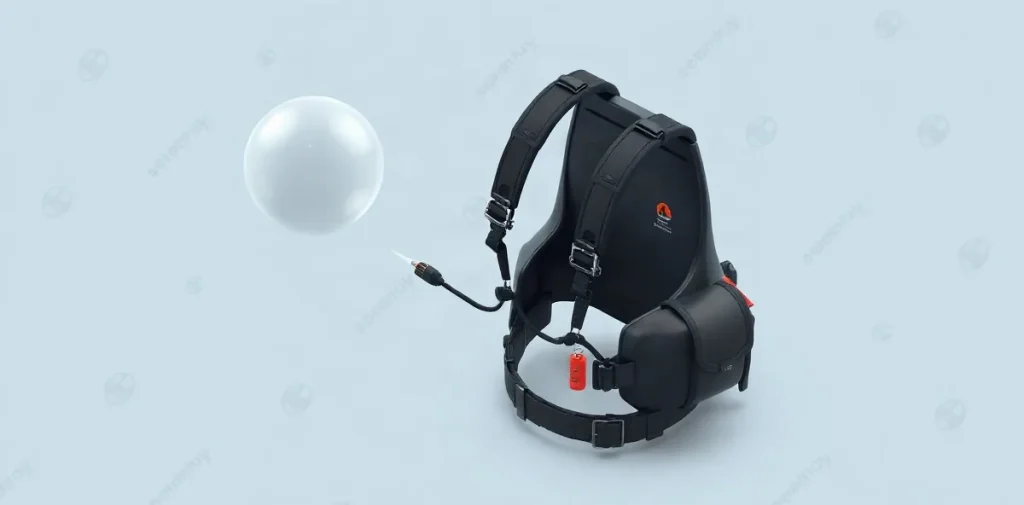
Buoyancy is the upward force a fluid exerts on an immersed object. For a diver, it depends on how much water the diver and equipment displace relative to their total weight: greater buoyancy tends to lift them, while lower buoyancy tends to make them descend.
This basic balance explains why a diver’s position in the water can change with depth, equipment and breathing. In this introduction to Wikipedia diving physics, we’ll unpack the principle behind buoyancy and how it shapes movement underwater.
| Adjustment | Buoyancy effect | Practical check |
|---|---|---|
| Add gas to BCD | Increases displacement and buoyancy | Check for an unintended rise |
| Vent gas from BCD | Reduces displacement and buoyancy | Check for an unintended descent |
| Add weights | Adds downward force | Reassess the full equipment setup |
| Inhale or exhale | Makes a temporary buoyancy change | Separate breath movement from lasting imbalance |
| Move equipment or weights | Can change body orientation | Check trim while hovering |
- 3 Common buoyancy states: positive, negative and neutral
- 2 Forces balanced in neutral buoyancy: upward buoyancy and downward gravity
- 1 Equipment used to add or vent gas and adjust buoyancy
What does buoyancy mean for a scuba diver?
Positive, negative and neutral buoyancy
For a scuba diver, buoyancy is the upward force water exerts on the immersed diver and equipment, opposing their weight. The balance depends on the diver’s total weight and how much water the combined system displaces—not on the diver alone.
Positive buoyancy occurs when the upward force exceeds the downward pull of gravity, so the diver rises; negative buoyancy occurs when weight exceeds buoyancy, so the diver sinks. An object floats if it displaces water weighing more than the object itself, and sinks if its weight is greater than the buoyant force. Neutral buoyancy is the balance point: upward buoyancy equals gravity, allowing a diver to remain at a steady depth rather than rise or sink.
- Exposure suit: its buoyancy contributes to the balance of the diver-and-equipment system.
- Cylinder and weights: both contribute to the system’s weight, changing its balance in the water.
- BCD: adding or releasing air changes the system’s buoyancy and can help a diver adjust depth.
Because the diver, suit, cylinder, weights and BCD act together, changing any one of them can shift the balance. Breath control also affects buoyancy: divers combine it with weight selection and BCD adjustments to manage their position in the water.
How do a BCD and weights change a diver’s buoyancy?
BCD gas and ballast
A BCD changes a diver’s buoyancy by changing its gas volume, while lead weights add downward force to offset the upward buoyancy of the diver and equipment. Adding gas increases the BCD’s volume and water displacement, increasing upward buoyancy; venting gas reduces its volume and displacement. The lead ballast works in the opposite direction, helping the diver manage the combined effect of the body, BCD and equipment.
- Add gas: increases BCD volume and buoyancy.
- Vent gas: reduces BCD volume and buoyancy.
- Add lead weights: increases downward force.
Neutral buoyancy is the balance point at which buoyant force and gravity are equal, so the diver can remain suspended rather than continue rising or sinking. In practice, add or vent BCD gas in small increments and check whether depth stays steady before making another adjustment; a continuing rise or descent means the balance has not yet been reached.
Breath control
Breathing provides a smaller, moment-to-moment buoyancy adjustment than changing BCD gas or ballast. Inhaling expands the chest and increases buoyancy; exhaling reduces chest volume and buoyancy. A diver can use this effect for fine control while relying on the BCD and weights to establish the broader balance.
Why does gas volume make buoyancy change with depth?
Gas volume changes buoyancy with depth because increasing water pressure compresses gas, while decreasing pressure lets it expand. Water pressure rises as the weight of water above a diver increases; gas in a buoyancy control device (BCD) responds by shrinking on descent and expanding on ascent.
On descent, compressed BCD gas occupies less space, so the BCD displaces less water and provides less upward buoyant force. The diver may therefore become negatively buoyant and descend more readily. Adding gas to the BCD can restore buoyancy, while the diver’s weights and breathing also affect the balance between upward buoyancy and gravity.
How ascent and breathing alter buoyancy
On ascent, lower surrounding pressure allows the gas in the BCD to expand. The larger BCD displaces more water, increasing buoyancy unless the diver vents gas; without venting, that increase can encourage further ascent. A breath also changes the volume of gas in the lungs: inhaling adds volume and can lift a diver, while exhaling reduces it. Near neutral buoyancy, these small changes can affect depth and trim—the diver’s orientation in the water—so controlled breathing and BCD adjustments work together.
How can a diver use trim to stay level?
Buoyancy is not the same as trim.
A diver can stay level by checking buoyancy and body position separately while hovering: confirm a steady depth, then adjust posture and equipment until the body is horizontal. Neutral buoyancy describes whether the diver rises, sinks or remains at depth; trim describes the diver’s orientation in the water.
- Depth: A steady depth indicates that the diver is not noticeably rising or sinking. If the diver changes depth, adjust buoyancy with breathing or BCD gas.
- Body position: A level torso and legs indicate horizontal trim. A diver may be neutrally buoyant yet have the torso or legs angled up or down.
Weight and equipment placement affect how the diver’s mass is distributed, so changing their positions can help correct an angled posture. A BCD changes buoyancy, but adding or releasing gas does not by itself guarantee horizontal trim.
Make the adjustments separately: use BCD gas to address rising or sinking, and reposition weights or equipment to address body angle. Recheck the hover after each change; aim for both a steady depth and a level body position rather than treating one as proof of the other.
When can buoyancy corrections go wrong?
Avoid chasing depth with large corrections
Buoyancy corrections can go wrong when a diver adds or vents BCD gas without allowing for how gas volume changes with depth. Adding too much gas during descent can leave the diver overly buoyant; venting too much during ascent can make it difficult to hold depth. A breath also changes buoyancy temporarily, so it is not a lasting fix for an imbalance that calls for a BCD adjustment or a change in weighting.
Repeated BCD adjustments can make depth control worse if each correction is made before the previous change has taken effect. As ambient pressure falls during ascent, gas in the BCD expands; as pressure rises during descent, it compresses. If a diver does not account for that expansion or compression, successive corrections may overshoot the intended depth.
Allow for changes in the full configuration
A diver’s buoyancy depends on the complete equipment setup, not on weights or BCD technique in isolation. A weighting arrangement that works with one exposure suit and cylinder may not work unchanged with another, because changing equipment changes the diver’s overall buoyancy. Check the setup as a whole rather than carrying an adjustment over automatically.
- During descent: add BCD gas cautiously; excess gas can create too much lift.
- During ascent: vent cautiously; removing too much gas can make it harder to maintain depth.
- When changing equipment: reassess weighting and BCD adjustments for the new suit-and-cylinder combination.
What is the practical test for neutral buoyancy?
The practical test for neutral buoyancy is to stop finning at a chosen depth and check whether you remain at approximately the same level without a sustained rise or descent. A steady depth indicates neutral buoyancy; a brief movement after an inhale or exhale may simply reflect the effect of breathing.
Use slow, controlled breaths while observing your position: a movement that reverses with the next breath differs from a continuing change in depth. If you keep sinking, assess whether you need additional ballast or a small adjustment to your Buoyancy Control Device (BCD); if you keep rising, vent gas from the BCD and reassess. Make adjustments gradually, then pause again to see whether the change is lasting.
Repeat the check after equipment changes
Repeat the depth check whenever your equipment changes. Adding or removing gear alters the diver’s combined weight and the volume of water displaced, so a setup that was neutral before the change may no longer hold the same depth. Check again at a chosen depth rather than assuming the previous balance still applies.
FAQ
What makes a diver neutrally buoyant?
Why does a diver become less buoyant while descending?
Why must a diver vent a BCD while ascending?
Does neutral buoyancy mean a diver is horizontal?
What this piece draws on
- scuba-tutor.com — “Buoyancy – Scuba Tutor”
- NIH — “Diving Buoyancy – StatPearls – NCBI Bookshelf – NIH”
- dresseldivers.com — “Neutral Buoyancy: The Skill That Will Change the Way You Dive”
- blackflagdivecenter.com — “The Science of Diving: Understanding the Physics and”
