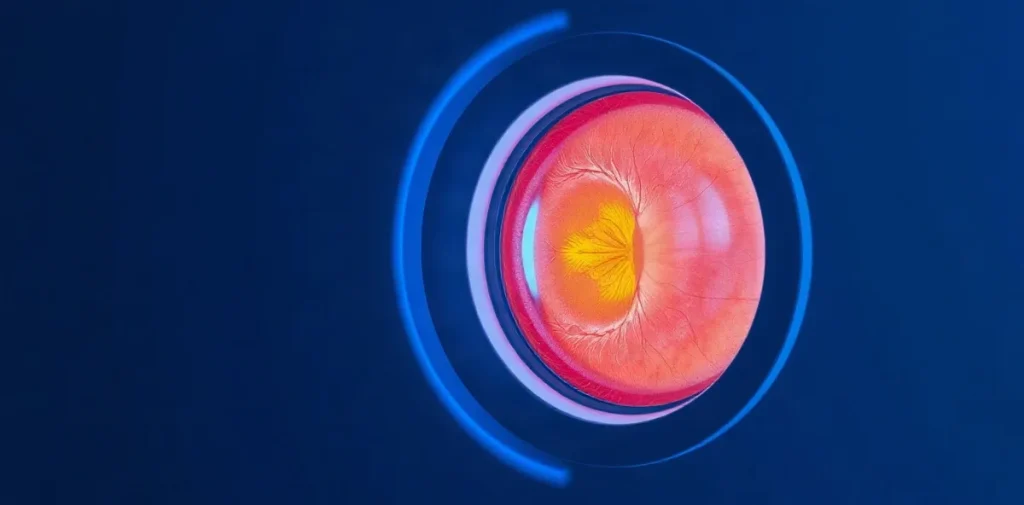
Quinine-related eye injury raises a difficult clinical question: can hyperbaric oxygen help protect vision when a drug has disrupted retinal function? The subject connects toxicology, eye physiology and oxygen treatment under pressure, while reminding divers that impaired vision can affect safe navigation and emergency decisions underwater.
How can quinine affect vision?
Quinine is a medication with known potential for ocular toxicity. The retina, the light-sensitive tissue lining the back of the eye, converts incoming light into signals for the brain. Injury to retinal cells or their supporting circulation can therefore interfere with visual function, even when the eye’s external structures appear unaffected.
Visual symptoms can include changes in clarity, field of view or colour perception. The pattern and severity depend on the individual case, and a sudden change in vision requires prompt medical assessment rather than self-diagnosis. For divers, subtle deficits may matter: reading instruments, judging distance and identifying a buddy all rely on reliable sight.
What does oxygen under pressure aim to do?
Hyperbaric oxygen therapy involves breathing oxygen in a chamber at pressure above that at the surface. Raising pressure increases the amount of oxygen dissolved in blood plasma, in addition to oxygen carried by haemoglobin. The treatment is used in selected medical conditions, but its rationale and usefulness depend on the underlying injury.
In an eye injury, the central physiological question is whether additional oxygen can support tissue whose function is threatened. That is not the same as reversing a toxic effect or restoring damaged retinal cells. Clinicians must weigh the proposed mechanism against the cause, timing and extent of injury, as well as the risks and practical demands of chamber treatment.
What questions shape research in this area?
Research at the intersection of toxicology and hyperbaric medicine asks how an injury develops, which tissues remain viable and whether an intervention changes the course of impairment. For ocular toxicity, assessment needs to distinguish symptoms from measurable changes in visual function and to account for other possible causes of those changes.
Studies may examine clinical observations alongside eye examinations and functional tests. When hyperbaric oxygen is considered, researchers also need to describe the treatment conditions and the interval between the suspected toxic exposure, onset of symptoms and therapy. Those details help clinicians judge whether observations can apply to another patient.
- Toxic exposure: what medication was taken and the timing of exposure.
- Eye function: which aspects of vision are affected and how they change over time.
- Oxygen treatment: the rationale, pressure conditions and treatment schedule.
- Clinical context: other health factors and alternative explanations for visual symptoms.
Because an individual case cannot settle questions of effectiveness, the wider field compares observations across patients and studies. The key distinction is between a plausible physiological mechanism and evidence that a treatment reliably improves outcomes.
Why does this matter in diving medicine?
Divers depend on vision to monitor gauges, maintain orientation and communicate underwater. A field-of-view deficit or reduced clarity can make routine tasks harder and can complicate a response to a developing problem. The same concern applies to scientific divers, whose work may require accurate visual observation and recording.
Hyperbaric treatment also has a special place in diving medicine because pressure exposure can be therapeutic in some settings and hazardous when poorly managed. A chamber treatment is not equivalent to a dive, but both involve pressure and oxygen considerations. A diving-medicine physician should assess fitness to dive after significant visual symptoms or treatment, with the decision based on the person’s condition and the demands of the planned activity.
How should clinicians interpret an individual case?
Evaluation starts with the clinical history: the medication and exposure, when symptoms began, and whether they are changing. Eye examination and appropriate visual-function testing help define the problem. Clinicians also consider other causes of sudden visual disturbance rather than assuming quinine is responsible.
Decisions about hyperbaric oxygen belong within specialist medical care. The potential benefit, treatment risks and alternatives must be considered for the individual, and follow-up matters because visual function can change. Anyone with new or worsening visual symptoms should seek urgent medical assessment; divers should not return to diving until cleared by a physician familiar with diving medicine.
Frequently asked questions
What is ocular quinine toxicity?
Why might hyperbaric oxygen be considered?
Can someone dive after a quinine-related visual problem?
An original research-library explainer written by the Rubicon editors. It is not a summary of a specific publication.
Related reading on Rubicon
- The Physiology Behind Oxygen Toxicity in Deep Dives
- Understanding Oxygen Toxicity Risks and Prevention in Diving
- Oxygen Partial Pressure: Key to Dive Safety and Performance
- Myth Busting: Clarifying Oxygen Toxicity Limits in Diving
- Hyperbaric Oxygen Therapy for Lyme Disease
- Erythromelalgia and Hyperbaric Oxygen
- More on Dive Medicine
- Browse the Research Library