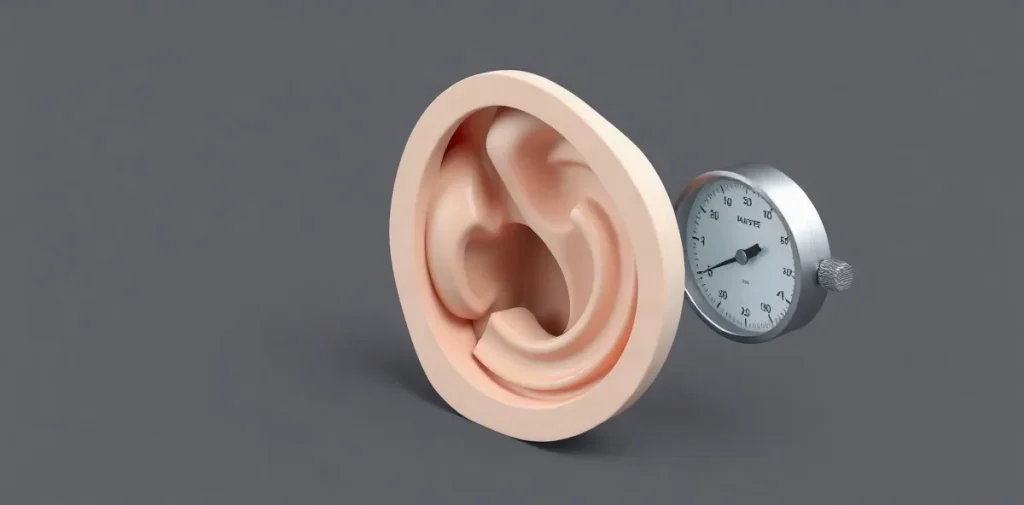
Ear and sinus barotrauma research examines how pressure changes injure or disturb the middle ear and paranasal sinuses, and which factors make symptoms more likely. The subject matters in diving and hyperbaric treatment because safe compression and decompression depend on pressure equalisation across air-filled spaces.
Why do ears and sinuses react to pressure?
As ambient pressure rises during descent or chamber compression, gas in the middle ear and sinuses is compressed. The middle ear normally equalises through the Eustachian tube, while the sinus openings allow gas to move between the sinuses and the nasal cavity. If those pathways do not function freely, a pressure difference can develop across tissue.
That difference may cause pain, inflammation, bleeding or, in more serious cases, tissue injury. On ascent or chamber decompression, expanding gas must also escape; an obstruction can therefore cause problems in either direction. The relevant physiology is not unique to diving, but pressure exposure makes small differences in airway function consequential.
What does research on risk factors ask?
Studies of symptomatic barotrauma ask which conditions, exposure features or individual characteristics are associated with ear or sinus symptoms during pressure change. A multiplace hyperbaric chamber provides a controlled setting in which several people undergo treatment together, allowing investigation of barotrauma in clinical pressurisation rather than only during underwater dives.
Research in this area may distinguish symptoms by location and timing, and examine whether they arise during compression or decompression. It also needs to separate an observed association from a cause: nasal congestion, for example, may affect equalisation, but a risk assessment must consider how symptoms are defined and what other factors accompany the exposure.
Common concepts in this work include:
- Equalisation: movement of gas that reduces pressure differences across the middle ear or within the sinuses.
- Barotrauma: tissue injury or symptoms caused by a pressure difference between a body space and its surroundings.
- Exposure profile: the pattern and rate of compression and decompression, along with the pressure environment.
- Symptomatic outcome: reported discomfort or other clinical signs, which is not necessarily the same as objectively confirmed injury.
How are these problems assessed?
Clinical assessment starts with the history: the pressure exposure, when symptoms began, their location and severity, and whether equalisation was difficult. Examination can help identify changes in the ear or nasal passages. In research, consistent definitions matter because transient discomfort, visible tissue changes and significant injury are different outcomes.
Risk-factor studies typically compare people or exposures with and without a specified outcome, then consider possible contributors. The setting matters. Chamber compression is controlled and can be observed by a clinical team, while diving adds factors such as changing depth, water conditions, task demands and the diver’s ability to pause or abort a descent.
A reported symptom is useful, but it does not by itself identify the mechanism. Congestion, anatomical variation, pressure-change conditions and the timing of equalisation may interact, so interpretation depends on the particular population and protocol being studied.
What does chamber research mean for divers?
Chamber and diving medicine share the basic problem of gas-filled spaces responding to changing ambient pressure. Findings from one setting can help frame questions in the other, but the environments are not interchangeable. A chamber session is supervised and usually follows a planned profile; an underwater descent may involve less control over the pace and surroundings.
For divers, the practical relevance is the importance of recognising pressure-related ear or sinus symptoms early. Pain or difficulty equalising during descent is a reason not to force the change in pressure. Recurrent symptoms deserve assessment by a diving-medicine physician, who can consider the person’s history and fitness for the planned exposure.
Hyperbaric clinicians also need to distinguish discomfort from injury and to judge whether pressure treatment can proceed safely. Research on risk factors can inform that assessment, but decisions depend on the patient, the treatment indication and the clinical protocol.
Frequently asked questions
Is ear barotrauma the same as sinus barotrauma?
Can congestion make equalisation harder?
Why study barotrauma in a chamber as well as in divers?
An original research-library explainer written by the Rubicon editors. It is not a summary of a specific publication.