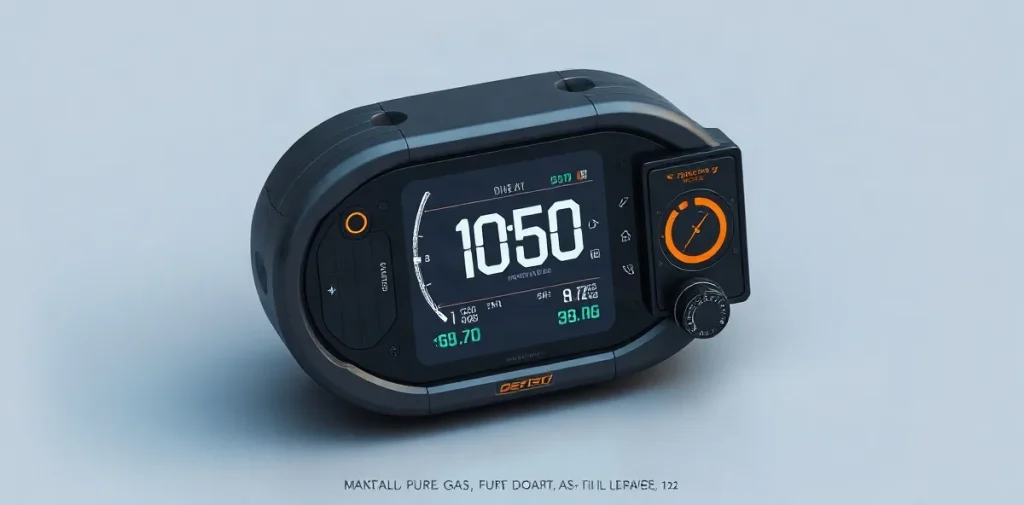
How have dive computers evolved to improve dive safety and planning?
Dive computers have progressed from basic elapsed-time and depth gauges to sophisticated multi-gas integrated systems that calculate precise decompression schedules in real time, significantly improving dive safety and planning. Modern devices incorporate algorithms for various breathing gases, wireless air integration, and user-friendly interfaces, enabling divers to customize profiles and reduce decompression sickness risks.
What were the earliest dive computers and their limitations?
The first commercially available dive computers appeared in the early 1980s, with models like the Uwatec Aladin introduced in 1983. These devices primarily functioned as depth and time meters, applying simple Bühlmann decompression algorithms to give no-decompression limits. Early units lacked gas switching capabilities and had limited memory and display functionality, restricting dive planning to single-gas profiles and shallow recreational depths.
Key features of early dive computers
- Basic depth and time monitoring
- Single gas algorithm application
- Limited user interface and data storage
- No wireless or air integration
When did multi-gas and integrated systems become mainstream?
Multi-gas dive computers gained popularity in the late 1990s and early 2000s, with companies like Suunto and Oceanic leading advancements. The Suunto Vyper, launched in 1997, was among the first commercially successful multi-gas computers, supporting up to three different breathing gases. Integrated systems that include wireless tank pressure monitoring and digital compass functions became more common by 2015, enhancing situational awareness and gas management underwater.
Examples of modern integrated dive computers
- Shearwater Teric – full-color AMOLED display, supports up to 5 gases
- Garmin Descent Mk2i – includes wireless air integration and GPS surface navigation
- Suunto D5 – customizable display and easy gas switching
| Model | Max Gases | Wireless Air Integration | Display Type | Price (USD) |
|---|---|---|---|---|
| Shearwater Teric | 5 | Yes | Full-color AMOLED | 1,500 |
| Garmin Descent Mk2i | 5 | Yes | Full-color sunlight-readable LCD | 1,800 |
| Suunto D5 | 3 | Yes | Color LCD | 850 |
How do multi-gas algorithms enhance dive planning?
Multi-gas algorithms allow divers to switch between different breathing gases such as air, nitrox, and trimix during a dive. This flexibility optimizes inert gas absorption and elimination, reducing nitrogen narcosis and decompression time. Algorithms like Bühlmann ZHL-16C with gradient factors and VPM-B are implemented in modern dive computers to tailor decompression stops based on gas mixes, dive profile, and ascent rate.
Benefits of multi-gas algorithms
- Reduced decompression obligation through optimized gas use
- Lower risk of oxygen toxicity by limiting partial pressure exposure
- Improved bottom time and safety margins
What impact has wireless air integration had on diving?
Wireless air integration, first introduced commercially around 2000 and refined by 2026, allows dive computers to receive real-time tank pressure data from transmitters mounted on cylinders. This innovation enhances safety by providing continuous monitoring of remaining gas supply without manual checks. It also enables more accurate gas planning and alerts for low pressure, reducing incidents of out-of-gas emergencies.
Leading wireless air integration systems
- Garmin Descent Mk2i with Garmin’s proprietary transmitter
- Suunto Tank POD compatible with Suunto D5 and EON Steel
- Shearwater’s Bluetooth-enabled transmitters for Teric and Perdix AI
- 5 number of breathing gases supported by top-tier computers
- $850-$1,800 price range for modern multi-gas dive computers
- 2026 year by which wireless air integration became standard in premium models
Frequently asked questions
What is the difference between single-gas and multi-gas dive computers?
How does wireless air integration improve dive safety?
Are multi-gas dive computers suitable for recreational divers?
What are common decompression algorithms used in dive computers?
Key takeaways
- Dive computers evolved from basic timers to multi-gas, fully integrated devices enhancing safety and planning
- Multi-gas support improves dive flexibility and reduces decompression times
- Wireless air integration became a standard safety feature by 2026
- Modern dive computers range from $850 to $1,800, offering diverse features for different diver needs
- Advanced algorithms tailor decompression for safer ascents and longer bottom times
Conclusion
The evolution of dive computers from simple elapsed-time devices to sophisticated multi-gas integrated systems marks a significant leap in dive safety and planning capabilities. By supporting multiple breathing gases, incorporating wireless air integration, and employing advanced decompression algorithms, modern dive computers empower divers to manage complex profiles with greater confidence and precision. As technology continues to advance, these devices will remain central to safe and efficient underwater exploration.