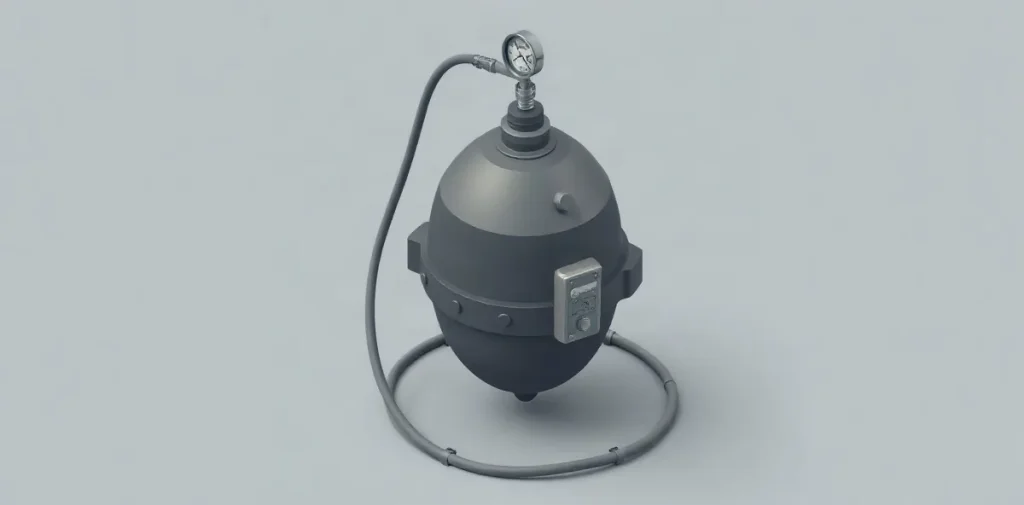
Commercial mixed-gas and saturation diving examine how divers can work at depth while breathing gases other than ordinary air, and how they return to the surface safely. The subject matters because pressure changes alter both gas physiology and decompression demands; equipment, procedures and medical oversight must account for those changes together.
Why use mixed gas instead of air?
As depth increases, the pressure of every gas in a breathing mixture rises. Air’s nitrogen can produce narcosis, while oxygen becomes toxic at sufficiently high partial pressure. Replacing some nitrogen with helium can reduce narcosis, and adjusting oxygen content can help manage oxygen exposure. These changes do not remove risk: the mixture must suit the planned depth and operating conditions.
Mixed-gas diving therefore links breathing-gas composition to the whole dive plan. Gas density affects breathing effort, and a diver’s oxygen exposure depends on both the oxygen partial pressure and the time spent breathing it. Changes in depth can change partial pressures, so gas selection and depth control are closely connected.
What distinguishes surface-supplied and bell diving?
In surface-supplied diving, a diver receives breathing gas through an umbilical from the surface. The system can also support communication and provide a route for monitoring and assistance. The diver’s exposure still depends on depth, workload, gas supply and the procedures used to manage the dive.
A diving bell provides a pressurised environment for transfer to and from the worksite. In bell-bounce operations, divers make a relatively short excursion from the bell and return to it before the overall operation ends. Saturation diving takes a different approach: divers remain under pressure long enough for their tissues to approach equilibrium with the breathing gas, then undergo decompression at the end of the exposure.
- Surface-supplied gas: breathing gas reaches the diver through an umbilical.
- Bell bounce: the bell supports access to the worksite and return between excursions.
- Saturation: prolonged pressure exposure makes decompression a substantial, planned phase.
- Mixed gas: the proportions of oxygen and inert gases affect narcosis, oxygen exposure and decompression.
How do pressure and decompression shape the problem?
During descent, inert gases move from the lungs into the body’s tissues. During ascent, the pressure falls and those gases leave the tissues. If the change is too rapid for the gas to be eliminated safely, bubbles can form and contribute to decompression sickness. The risk depends on the exposure and ascent profile, not simply on the maximum depth.
Gas choice changes the decompression problem because different inert gases enter and leave tissues at different rates. A saturation exposure also differs from a short dive: once tissue gas loading approaches equilibrium, extending time at depth does not make the eventual decompression disappear. The decompression schedule and the ability to maintain the required conditions are central operational concerns.
Which medical and operational risks need attention?
Decompression sickness and oxygen toxicity are distinct hazards, though both are relevant to mixed-gas operations. Oxygen toxicity can affect the central nervous system or lungs, depending on the exposure. High-pressure nervous syndrome is another concern in deep helium breathing. Narcosis, cold, fatigue and the physical demands of work can also affect performance and safety.
These hazards are managed through a system rather than a single safeguard. Gas supply, depth and time control, equipment reliability, communication, emergency planning and decompression procedures must work together. Symptoms after a dive require assessment by a diving-medicine physician; suspected serious decompression illness needs prompt medical care.
What questions guide research in this field?
Research on commercial mixed-gas and saturation diving considers how physiology interacts with equipment and operating procedures. Investigators may examine gas exposure, decompression schedules, oxygen limits, diver monitoring and the practical demands of surface-supplied or bell-based systems. The aim is to understand risks under defined conditions and how those conditions affect safe work.
This area sits alongside research on decompression sickness, oxygen toxicity and deep surface-supplied diving. For divers, clinicians and scientific teams, the value is in connecting physiological mechanisms to decisions made before and during an operation. Specific procedures depend on the diving system, exposure and governing operational requirements.
Frequently asked questions
Is mixed-gas diving the same as saturation diving?
Why does saturation require planned decompression?
Can a diver judge oxygen toxicity or decompression sickness alone?
An original research-library explainer written by the Rubicon editors. It is not a summary of a specific publication.
Related reading on Rubicon
- Diving Physics: Gas Laws, Pressure Effects, and Safety
- Gas Laws Every Diver Must Know for Safe Diving Practice
- The Diving Reflex: What Happens Underwater
- Scuba Diving Fins: Split vs. Paddle Designs
- Pulmonary Function and Deep Mixed-Gas Diving
- Commercial Diving Gas and Bell Operations: Research Summary
- More on Diving Science
- Browse the Research Library