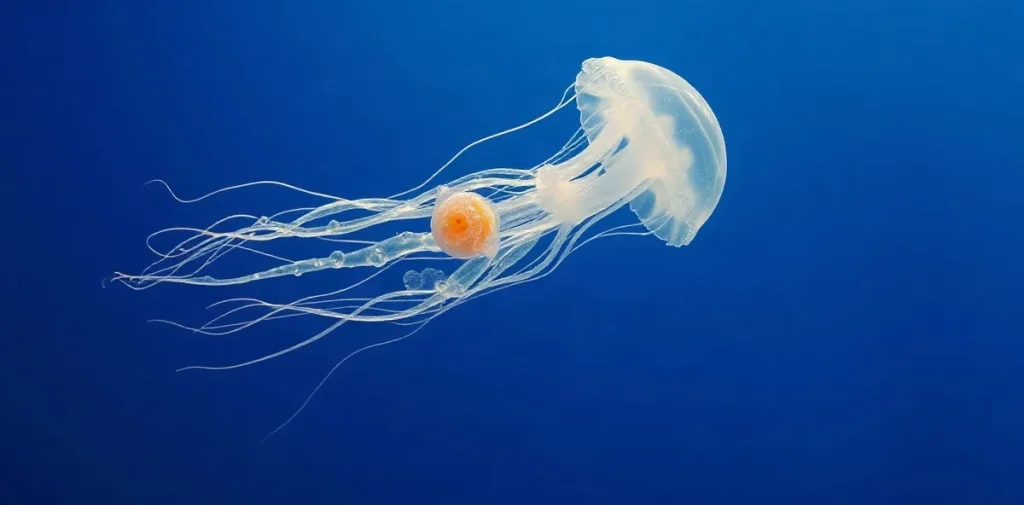
Research into whether jellyfish toxins are heat labile asks whether heat can alter the biological activity of venom in a sting. The question matters underwater because jellyfish injuries can cause pain and skin damage, while mistaken first aid may add harm; understanding the toxin is part of choosing a safe response.
What does “heat labile” mean for a toxin?
A heat-labile substance changes when exposed to heat, potentially losing or altering its biological activity. For a venom, the relevant question is not simply whether warmth changes a molecule in a laboratory, but whether any change meaningfully affects the injury produced in living tissue.
Jellyfish venom is a mixture of biologically active components delivered by stinging cells. The effects depend on the species, the amount and location of contact, and the person’s response. A laboratory test of one toxin or one activity therefore cannot automatically describe every jellyfish sting.
How can researchers test the effect of heat?
Studies can expose venom or a venom-containing preparation to controlled temperatures, then compare its activity with an untreated sample. The measured effect depends on the assay: researchers may examine cellular damage, tissue responses, or another biological action. A result in one test answers that test’s question, not every question about clinical treatment.
Temperature, exposure time, sample handling and the way activity is measured all matter. Heating a preparation in a controlled setting is also different from applying hot water to skin after a sting. In the latter case, researchers and clinicians must consider both the venom and the risk of a thermal injury.
- Target: which venom component or biological activity is being examined.
- Exposure: the temperature and duration of heating.
- Comparison: whether heated material is tested against an appropriate untreated control.
- Relevance: whether the assay reflects effects in human skin and the circumstances of an actual sting.
Why is a laboratory result not a first-aid rule?
Heat may affect some biological substances without neutralising an entire venom, and an apparent change in an assay does not establish that a particular treatment is safe or effective on a person. The temperature that alters a sample may also be impractical or unsafe to apply to skin. Clinical decisions must weigh pain relief, tissue injury and the possibility of a serious systemic reaction.
Jellyfish stings can range from local pain and skin irritation to more serious illness, depending on the circumstances. A diver should leave the water if symptoms interfere with safe swimming or breathing, and seek urgent medical help for severe or spreading symptoms, breathing difficulty, faintness or a widespread allergic reaction. For treatment choices, follow current local first-aid guidance and consult a diving-medicine physician when the injury may affect fitness to dive.
What makes jellyfish stings a diving-medicine problem?
A sting can happen during entry, exit, a dive or surface work, when pain and distraction may interfere with equipment handling and safe movement. Divers may also be far from prompt medical assessment. The immediate problem is therefore both biological and operational: the injury must be managed without creating a second hazard in the water.
For diving physicians and hyperbaric clinicians, the key task is to assess the actual injury and the diver’s overall condition. Hyperbaric treatment is not a general remedy for jellyfish venom; its use depends on a separate clinical indication. Research on venom properties helps frame questions, while treatment decisions still require clinical assessment and relevant local protocols.
How does this question fit into venom research?
Testing heat sensitivity sits within a broader effort to connect venom chemistry with biological effects and practical care. Researchers distinguish the properties of isolated substances from the activity of a complex venom, then ask whether laboratory observations translate to tissue injury and patient outcomes. Each step needs evidence suited to that level of the question.
This approach is familiar across diving medicine: a mechanism can suggest what to investigate, but it does not by itself establish a treatment. For divers, the useful takeaway is to treat claims about heat cautiously, avoid improvised remedies that risk burns, and use current local guidance after a suspected sting.
Frequently asked questions
Does “heat labile” mean heat cures a jellyfish sting?
Can laboratory heating tests predict what happens in a real sting?
When should a diver seek medical assessment?
An original research-library explainer written by the Rubicon editors. It is not a summary of a specific publication.