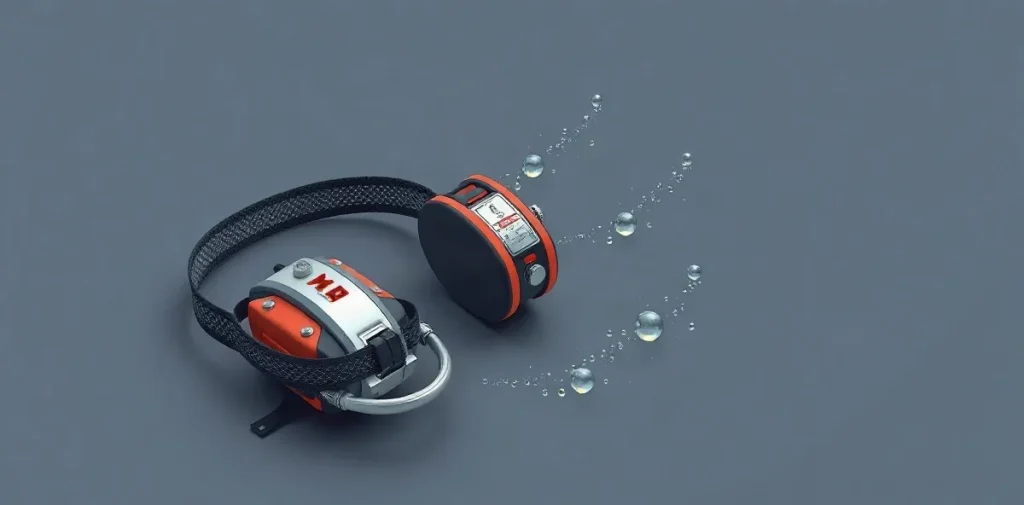
Dropping a weight belt is an emergency action with an immediate effect on buoyancy: it removes ballast and can turn a controlled ascent into a rapid, difficult-to-stop one. Understanding that trade-off connects equipment use with ascent physiology, emergency decisions and the prevention of pressure-related injury.
Why does releasing a belt change buoyancy so quickly?
A diver carries weight to offset the positive buoyancy of the body, exposure suit and other equipment. The belt is ballast, not a device that controls depth by itself; buoyancy also changes with breathing, depth, suit compression and the amount of gas in a buoyancy compensator.
At depth, pressure compresses gas in a suit and in the compensator. As the diver rises, that gas expands, increasing buoyancy unless it is vented. Releasing ballast adds another upward force at once, so a diver may accelerate before they can regain control.
The practical question is not simply whether dropping weight makes someone float. It is whether the immediate danger of remaining underwater is greater than the danger of an uncontrolled ascent, and whether the diver can manage buoyancy while surfacing.
What emergency is the decision meant to address?
Weight release is considered when a diver cannot maintain positive buoyancy or reach the surface safely through ordinary control. Possible circumstances include a failed buoyancy compensator, exhaustion, entanglement or a problem that prevents effective swimming. The appropriate response depends on the actual hazard, depth, equipment and the diver’s condition.
Releasing a belt is not a general remedy for every difficulty underwater. A rapid ascent can cause lung overexpansion injury, particularly if expanding gas cannot escape from the lungs, and can increase decompression stress. A diver who is able to establish buoyancy and ascend under control may face a different risk balance from someone who cannot stay afloat.
Training treats emergency actions as decisions under changing conditions, not as a single rule for every dive. Divers should follow their training and equipment procedures; an individual medical or return-to-diving question belongs with a diving-medicine physician.
How do studies examine weight-belt release?
Research on emergency buoyancy decisions can examine how ballast, exposure protection, compensator function and ascent behaviour interact. Controlled equipment tests can isolate changes in buoyancy, while human studies can assess task performance and decision-making under defined conditions. Each method answers a different question, and results depend on the configuration and scenario tested.
Relevant measurements may include changes in buoyancy, ascent rate, depth, gas use and a diver’s ability to vent expanding gas. Investigators also need to account for differences in suit type, carried equipment, starting depth and the way the emergency is presented. An observation from one setup does not automatically apply to every diver or configuration.
The subject sits across diving safety, equipment design and human physiology. It is distinct from decompression illness research, but the fields meet during ascent: decisions about reaching the surface affect exposure to pressure change and the ability to control that change.
What should divers consider before a dive?
Equipment configuration and practice shape what an emergency response can achieve. A belt that can be released without obstruction may be important in some setups, but its presence does not replace buoyancy skills, a functioning compensator or a plan for assisting a buddy.
- Ballast: It should be sufficient for the intended dive without making routine buoyancy control unnecessarily difficult.
- Release access: The diver and buddy should know how the weight system is released and what equipment might interfere.
- Ascent control: Divers need to understand how to vent buoyancy and avoid holding their breath during ascent.
- Practice: Emergency procedures should match the equipment and training used for the dive.
These are planning considerations, not a substitute for hands-on instruction or an individual assessment. If a medical condition, injury or prior diving incident affects a diver’s ability to respond, seek advice from a physician experienced in diving medicine.
Frequently asked questions
Does dropping a weight belt always make a diver ascend?
Why can a rapid ascent be dangerous?
Should every diver practise releasing a weight system?
An original research-library explainer written by the Rubicon editors. It is not a summary of a specific publication.
Related reading on Rubicon
- How Buoyancy Control Devices Enhance Diver Safety
- How Nitrogen Absorption and Release Affect Dive Safety
- Evaluating Safety Benefits of Integrated Weight Systems in
- Is Dropping Your Weight Belt the Right Response?
- Helium Decompression Tables and Bubble Control
- More on Safety
- Browse the Research Library