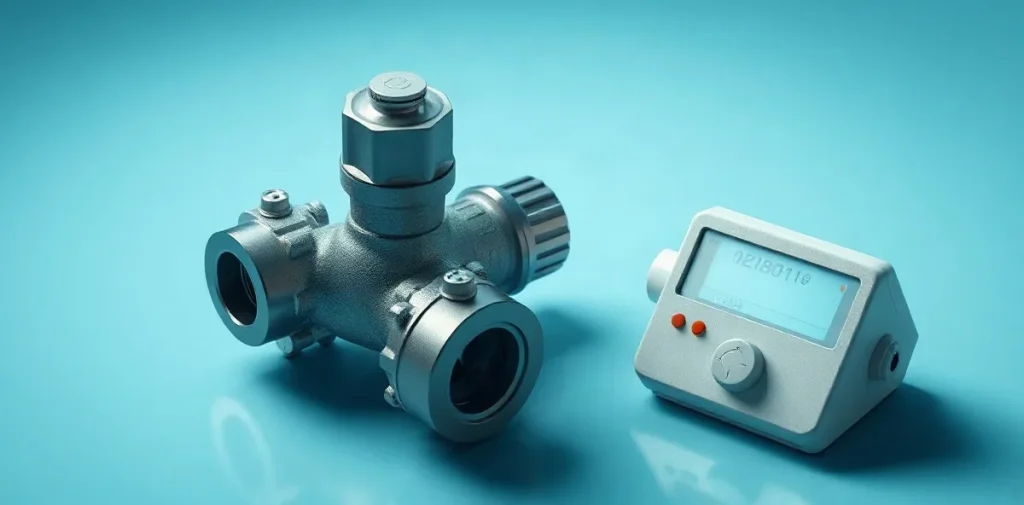
Cleaning and gas analysis for diving systems address two linked questions: what contaminants remain in equipment, and what gases are actually present in a breathing supply? Both matter because a diver depends on compatible materials and a correctly characterised gas mixture, not merely equipment that looks clean or a cylinder with a reassuring label.
Why does cleanliness matter in breathing equipment?
Breathing-gas systems include components that contact gas under pressure, such as cylinders, valves, regulators and charging equipment. Residues from oils, lubricants, solvents, moisture, particles or corrosion can affect equipment function and, in some circumstances, create a fire or contamination hazard. The risk depends on the contaminant, its amount, the materials involved and the conditions of use.
Oxygen service makes contamination control especially important. Oxygen itself does not burn, but it supports combustion; materials that are relatively difficult to ignite in air may behave differently in oxygen-enriched conditions. A particle or residue can also interfere with valves and seals, so cleanliness is a matter of both gas compatibility and mechanical reliability.
Cleaning is therefore not simply cosmetic maintenance. It means selecting a process that removes unwanted material without leaving new residues or damaging components, then protecting the cleaned equipment from recontamination during handling and storage.
What does gas analysis tell a dive team?
Gas analysis identifies or measures constituents in a breathing mixture. Depending on the application, the relevant questions may include the oxygen fraction, whether a gas is consistent with its intended use, and whether unwanted contaminants are present. The result helps a team assess a supply before it is used, rather than relying only on its preparation history or cylinder identification.
Composition matters because gas properties affect breathing and exposure underwater. Oxygen fraction is central to oxygen exposure and to calculating the partial pressure encountered at depth. Other constituents have their own physiological effects, while contamination can make a mixture unsuitable even when its principal components appear correct.
Analysis is a measurement, not a guarantee that every possible hazard has been excluded. Instruments have operating limits and require appropriate use and upkeep; sampling, calibration and interpretation all affect whether a reading is meaningful. A sound process matches the measurement method to the gas and the decision being made.
How do cleaning and analysis fit together?
These controls address different failure paths. Cleaning concerns the condition of equipment surfaces and gas pathways; analysis concerns the composition of the gas delivered for use. A clean system cannot correct a wrongly prepared mixture, and a suitable analysis cannot establish that a contaminated component is safe.
In practice, quality assurance treats the gas supply and the equipment that handles it as a connected chain. The questions include how components are cleaned, how they are protected afterward, how a sample is obtained, and whether the analytical instrument is suitable for the target gas. Each step needs to preserve the integrity of the next.
- Contamination control: identify residues or particles that could affect materials, gas quality or equipment operation.
- Oxygen compatibility: consider how oxygen-enriched conditions change combustion hazards and material suitability.
- Mixture verification: measure relevant gas constituents before making a use decision.
- Measurement quality: account for instrument condition, calibration, sampling and interpretation.
- Traceability: keep handling and checking procedures clear enough for the team to apply consistently.
Why does this technical work matter to divers and clinicians?
For divers, dependable gas and equipment controls reduce avoidable uncertainty before a dive. They are particularly relevant when breathing mixtures are prepared or handled for a specific depth or task, including technical diving, scientific work and oxygen-enriched applications. Operational procedures should reflect the equipment, gas and intended use rather than treating every supply as interchangeable.
Diving physicians and hyperbaric clinicians also depend on reliable gas delivery. In clinical settings, the intended treatment exposure relies on controlled breathing-gas composition and functioning delivery equipment. Contamination or an unrecognised mixture error can undermine that control, making technical quality assurance part of safe clinical practice as well as dive operations.
This research area sits alongside work on decompression, rebreathers and pressurised rescue. Those subjects examine physiological stress, breathing-system design or the consequences of exposure; gas cleanliness and analysis address the integrity of the medium and apparatus on which those activities depend. When a concern involves a particular exposure or health condition, consult a diving-medicine physician.
What should a reliable checking process consider?
A useful process starts by defining the intended gas and equipment use, then selecting cleaning and analytical methods appropriate to that purpose. The details matter: a procedure suitable for one material or gas service may not suit another, and measurement should answer a clearly stated operational question.
Teams also need to control what happens between checks and use. Cleaned components can be recontaminated through contact, unsuitable storage or later maintenance; gas readings can be misleading if sampling or instrument handling is poor. Follow the equipment maker’s instructions and the applicable procedures for the system in use, and have uncertain results assessed before the gas is used.
Frequently asked questions
Does clean equipment prove that a breathing gas is suitable?
Why is oxygen service treated with special care?
Can one gas analyser answer every safety question?
An original research-library explainer written by the Rubicon editors. It is not a summary of a specific publication.
Related reading on Rubicon
- Diving Physics: Gas Laws, Pressure Effects, and Safety
- Gas Laws Every Diver Must Know for Safe Diving Practice
- How Rebreather Systems Optimize Gas Use and Extend Dive Time
- The Diving Reflex: What Happens Underwater
- Cleaning and Gas Analysis for Diving: Research Summary
- Pulmonary Function and Deep Mixed-Gas Diving
- More on Equipment
- Browse the Research Library