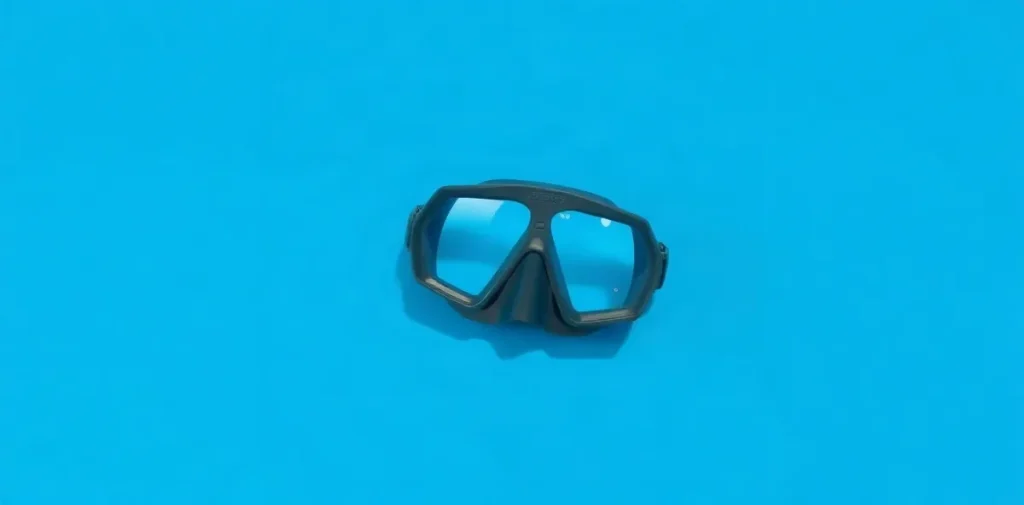
Apparent movement of underwater objects during head motion is a problem of visual orientation: the scene may seem to shift even when it is still. Studying this effect connects vision, balance and the unusual sensory conditions of immersion, with practical consequences for divers who must navigate, read instruments or work accurately.
Why can a steady scene seem to move?
Your eyes, inner ears and body-motion cues normally work together to estimate how you are moving. When you turn your head, the vestibular system senses rotation, while the visual scene shifts across the retina. The brain combines these signals to distinguish movement in the environment from movement of the observer.
Underwater, that interpretation can become less straightforward. Refraction through a mask changes the apparent size and position of objects, and water can reduce contrast and remove familiar visual references. A diver who moves the head while looking at a nearby or poorly defined object may therefore experience a mismatch between expected and perceived motion.
“Apparent movement” describes perception, not necessarily physical movement of the object. The central research question is how head motion and underwater viewing conditions affect the perception of a stationary scene.
What sensory systems are involved?
The vestibular organs in the inner ear register angular and linear acceleration. Vision supplies information about motion relative to the surrounding scene, while proprioception—the sense of body position from muscles and joints—adds another reference. These systems usually reinforce one another, but they can conflict when their cues are altered or incomplete.
- Visual flow: the pattern of motion across the visual field as the head or body moves.
- Vestibular input: signals from the inner ear about head acceleration and orientation.
- Mask optics: refraction and the mask’s air space alter how underwater objects appear.
- Reference cues: contrast, distance and stable environmental features help the brain judge motion.
Buoyancy and the absence of a firm ground reference also change how movement is experienced. A small head turn can occur without the familiar accompanying cues of foot pressure or whole-body displacement. The effect depends on the task, the visual scene and the diver’s movement, rather than on head motion alone.
How do researchers examine the effect?
Research in this area separates the sensory inputs as far as practical. A study may compare perception while a person moves the head and looks at stationary targets, then vary features such as viewing distance, visual contrast or the availability of reference points. The key is to distinguish perceived object motion from actual movement of the target or observer.
Measurements can include reports of perceived direction or stability, alongside records of head movement and visual conditions. In underwater work, the apparatus and procedure must also account for the mask, water visibility and the constraints of immersion. Laboratory tasks can isolate mechanisms; operational settings show how those mechanisms interact with real equipment and work demands.
The subject belongs to a broader line of diving research on orientation, motion perception and sensory conflict. It is related to, but distinct from, motion sickness: a perceptual mismatch can matter even when nausea is not the main issue.
Why does this matter during a dive?
Accurate visual orientation supports navigation, maintaining position and interpreting gauges or instruments. If a scene appears to move during a head turn, even briefly, a diver may need extra time to reacquire a target or confirm an instrument reading. That matters most when the task requires precise visual attention or when other reference cues are limited.
Scientific divers and underwater workers may need to inspect a fixed feature while changing body position. Instructors and dive-medicine clinicians also benefit from understanding that a report of visual instability can involve sensory processing, optical conditions or both. It should not automatically be treated as evidence of a single cause.
Visual disturbance can have more than one explanation, including equipment-related optics and medical factors. Persistent or concerning symptoms warrant assessment by a diving-medicine physician; a diver should also check that the mask is correctly fitted and the viewing conditions are clear.
What should be considered when interpreting the experience?
Perception is shaped by the scene as well as by the diver. A nearby object, low contrast, a featureless background and restricted visibility offer fewer stable cues than a clear scene with distinct reference points. Head-turn speed and direction may also influence the sensory information reaching the brain.
For practical observation, note whether the apparent motion occurs only during head movement, whether it changes with the target or background, and whether it persists when the head is still. These details can help separate a transient visual effect from a broader problem, but they do not replace clinical evaluation when symptoms are persistent or affect safe diving.
Frequently asked questions
Does an object actually move when it seems to shift?
Can a dive mask affect how movement is perceived?
When should a diver seek medical advice?
An original research-library explainer written by the Rubicon editors. It is not a summary of a specific publication.
Related reading on Rubicon
- The Diving Reflex: What Happens Underwater
- Why Divers Get Cold Faster Underwater
- Diving Safety: Key Insights into Underwater Exploration
- Diving: Exploring Underwater Activities, Science, and Safety
- Hydrodynamic Drag in Underwater Swimming
- Divers and Underwater Sound at 800–2250 Hz
- More on Diving Science
- Browse the Research Library