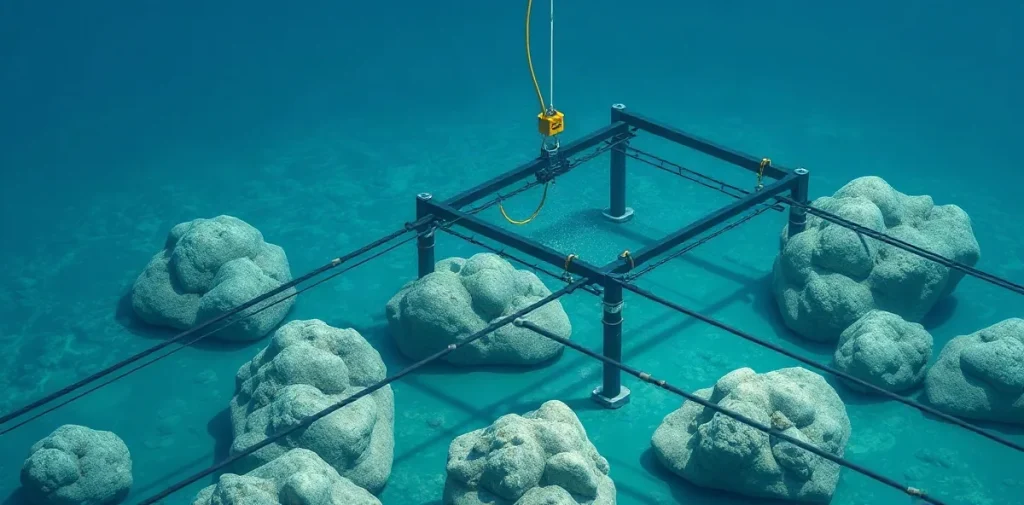
Diving for Science…1993 – Proceedings of the American Academy of Underwater Sciences (13th annual Scientific Diving Symposium) is a 1993 conference proceedings volume by Bozanic, published in the American Academy of Underwater Sciences. It addresses scientific diving: the use of underwater work to conduct research, where reliable methods must account for the effects and hazards of immersion.
What does scientific diving involve?
Scientific divers work underwater to observe, measure, collect or maintain research subjects and instruments. Their tasks can include careful positioning and repeated measurements, so buoyancy, visibility, water movement and limited bottom time affect both the work and the quality of observations.
Unlike recreational diving, scientific diving is defined by its research purpose. The methods must serve the study while keeping the diver and the research operation within safe limits. A proceedings volume from a scientific-diving symposium belongs to a field where practical techniques, research needs and diver safety meet.
Why does physiology matter to underwater research?
Immersion changes how the body handles circulation, heat and movement. Water pressure increases with depth, while breathing compressed gas changes the gas pressures acting on the body. These conditions shape how long a diver can work and what risks may accompany a particular task or profile.
Decompression is one central concern. During a dive, inert gas from the breathing mixture enters body tissues; during ascent, it leaves. An ascent that exceeds the body’s ability to eliminate gas safely can contribute to decompression illness. Work demands, depth, time, breathing gas and ascent procedures all matter when planning a dive.
- Immersion and workload: water movement, equipment and task effort affect how demanding a dive feels.
- Thermal stress: water removes body heat, and cold can impair comfort, dexterity and concentration.
- Gas exposure: pressure and breathing gas influence oxygen and inert-gas exposure.
- Decompression: ascent planning must account for gas uptake and elimination.
- Task design: research methods should fit the diver’s working conditions and the limits of underwater time.
How do researchers balance data quality and diver safety?
Underwater research has constraints that do not apply in the same way on land. A diver may have to complete a measurement before a planned ascent, work in gloves, manage instruments and maintain orientation in reduced visibility. These factors can affect precision and increase task loading.
Good study design therefore considers the dive as part of the measurement process. Researchers need to distinguish a biological or environmental signal from changes caused by handling, position, timing or the diver’s presence. Operational planning also matters: equipment, communications, team roles, emergency procedures and the return to the surface all shape what work is practical.
Where does a symposium volume fit in diving research?
Conference proceedings gather work and discussion associated with a meeting. This volume records the 13th annual Scientific Diving Symposium, placing it within an ongoing professional conversation about how underwater research is conducted. The proceedings format differs from a single research paper: a volume can address several subjects rather than one question or method.
Scientific diving overlaps with dive medicine, decompression research, human performance and underwater equipment practice. Its concerns are also relevant to hyperbaric clinicians, who assess pressure-related conditions, and to diving physicians advising on fitness and risk. The medical context is general; questions about an individual’s health or fitness to dive belong with a diving-medicine physician.
What should readers take from this volume’s subject?
The subject is not simply how to enter the water and collect data. It is how research objectives, human physiology and underwater operating conditions influence one another. A method that works on a bench or on land may need adjustment when the researcher must perform it while immersed and breathing under pressure.
Readers can use scientific-diving proceedings as a window into the practical questions that connect research and safe operations. When applying any technique, check the relevant current procedures, training requirements and medical advice for the dive and task at hand.
Frequently asked questions
What is scientific diving?
Why is decompression relevant to scientific divers?
Is this volume a single research paper?
Citation details
- Title: Diving for Science…1993 – Proceedings of the American Academy of Underwater Sciences (13th annual Scientific Diving Symposium)
- Authors: Bozanic, J.E
- Year: 1993
- Published in: American Academy of Underwater Sciences
- Record type: Conference proceedings volume
- Repository record: Rubicon Research Repository, handle 123456789/6319
This page is an original summary written by the Rubicon editors from the publication’s bibliographic record. It does not reproduce the paper, its abstract or its data; consult the publication itself for its methods and findings.
Related reading on Rubicon
- Diving: Exploring Underwater Activities, Science, and Safety
- Science Diving: Protocols and Techniques for Underwater
- The Diving Reflex: What Happens Underwater
- Diving: Science, Practice, and Destinations
- Scientific Diving and Underwater Research: Research Summary
- Advanced Scientific Diving: Research Summary
- More on Diving Science
- Browse the Research Library