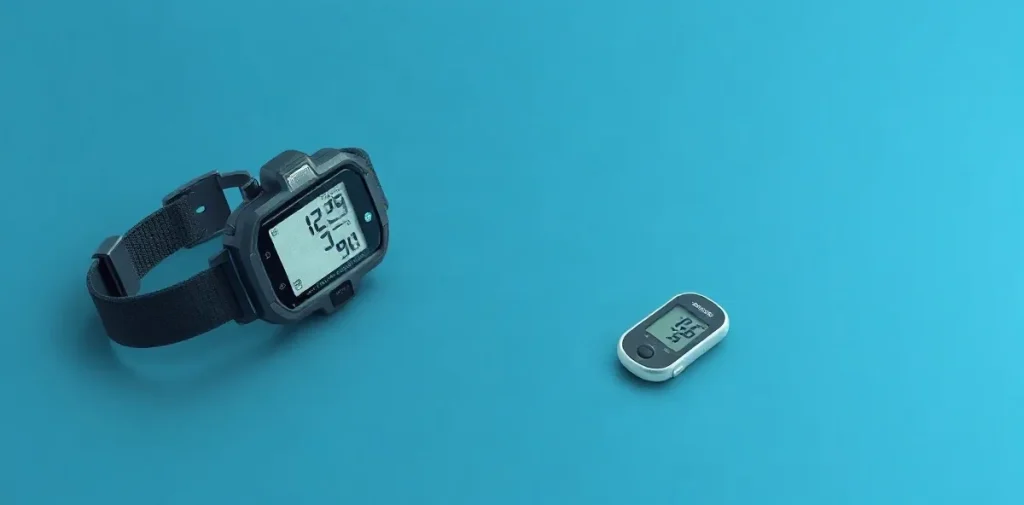
Blood Glucose Response to Single and Repetitive Dives in Insulin-requiring Diabetics: a Preliminary Report is a 1998 meeting abstract by Uguccioni and colleagues. It addresses how blood glucose relates to one dive and to repeated dives in people who require insulin—a question central to understanding the interaction between diving, physical exertion, and diabetes.
Why consider blood glucose during diving?
Insulin helps move glucose from the bloodstream into tissues, where it can be used for energy. In a person using insulin, the balance between medication, food, activity, and the body’s changing energy needs requires attention. Diving adds a distinctive setting in which exertion, cold, stress, and restricted access to food or assistance can all matter.
Low blood glucose can impair concentration, judgement, coordination, and the ability to respond to a developing problem. Those functions are essential underwater, where a diver must manage equipment, monitor the environment, and communicate with a buddy. High glucose is also relevant to health and dive readiness, although the immediate concerns and implications differ from those of hypoglycaemia.
What do single and repetitive dives bring into focus?
A single dive and a series of dives pose related but not identical questions. During one dive, attention may centre on glucose before and after immersion, the energy cost of the activity, and how conditions such as cold or workload affect an individual. Repeated dives make the sequence important: exertion and recovery from an earlier dive may influence the context for the next one.
“Repetitive” in this research setting means more than repeating an underwater activity. It directs attention to changes across a dive day, including cumulative exertion, surface intervals, meals, medication timing, and recovery. These factors can vary substantially between divers and between dives, so a measured glucose response cannot be treated as a universal prediction for every person or profile.
Which physiological and operational factors matter?
Immersion and exercise can alter the body’s energy demands, while cold and psychological stress may also affect metabolic responses. The direction and magnitude of a glucose change depend on the person and circumstances; the same activity does not necessarily produce the same response on different occasions. Insulin use adds another interacting factor because its effects must be considered alongside food intake and activity.
- Glucose status: the starting level and its direction of change can both inform awareness of risk.
- Insulin and food: medication timing, carbohydrate intake, and the interval since eating shape the metabolic context.
- Dive workload: swimming effort, current, equipment, and the number of dives influence energy expenditure.
- Conditions: water temperature, stress, and recovery between dives may affect the overall response.
- Underwater consequences: any loss of cognitive or physical function can affect the diver and those relying on them.
These concepts explain why diving-medicine assessment considers both diabetes management and the practical demands of a planned dive. Monitoring is not merely a matter of recording a number; it must be interpreted in the context of symptoms, trends, activity, and the ability to respond safely.
How does this question fit into diving medicine?
Research on diabetes and diving sits at the intersection of endocrinology, exercise physiology, and operational safety. The broader challenge is to understand how a chronic condition and its treatment interact with an environment where problems can be harder to recognise and manage. Work on glucose responses contributes to that subject by framing questions about the effects of immersion and repeated activity.
The publication is identified as a meeting abstract in Undersea & Hyperbaric Medicine in 1998. Its topic belongs to the continuing effort to evaluate the physiological demands of diving for people using insulin. For clinicians and scientific divers, the relevant issues include individual variation, glucose monitoring, preparation for exertion, and the consequences of impairment underwater.
Frequently asked questions
What does “insulin-requiring” mean?
Why distinguish single from repetitive dives?
Does this topic provide personal clearance to dive?
Citation details
- Title: Blood Glucose Response to Single and Repetitive Dives in Insulin-requiring Diabetics: a Preliminary Report
- Authors: Uguccioni, DM; Pollock, NW; Dovenbarger, JA; Dear, GdeL; Feinglos, MN; Moon, RE
- Year: 1998
- Published in: Undersea & Hyperbaric Medicine 1998
- Record type: Meeting abstract
- Repository record: Rubicon Research Repository, handle 123456789/733
This page is an original summary written by the Rubicon editors from the publication’s bibliographic record. It does not reproduce the paper, its abstract or its data; consult the publication itself for its methods and findings.
Related reading on Rubicon
- Google Scholar Research: Search and Assess Sources
- Ear Barotrauma in Diving: Pain, Risks and Care
- Scuba Diving: Why Immersion Can Dehydrate You
- Why Scuba Diving Tanks Feel Empty Before They Are
- HPNS Suppression in Deep Human Dives: Research Summary
- Flying After Diving: Research Summary
- More on Dive Medicine
- Browse the Research Library
