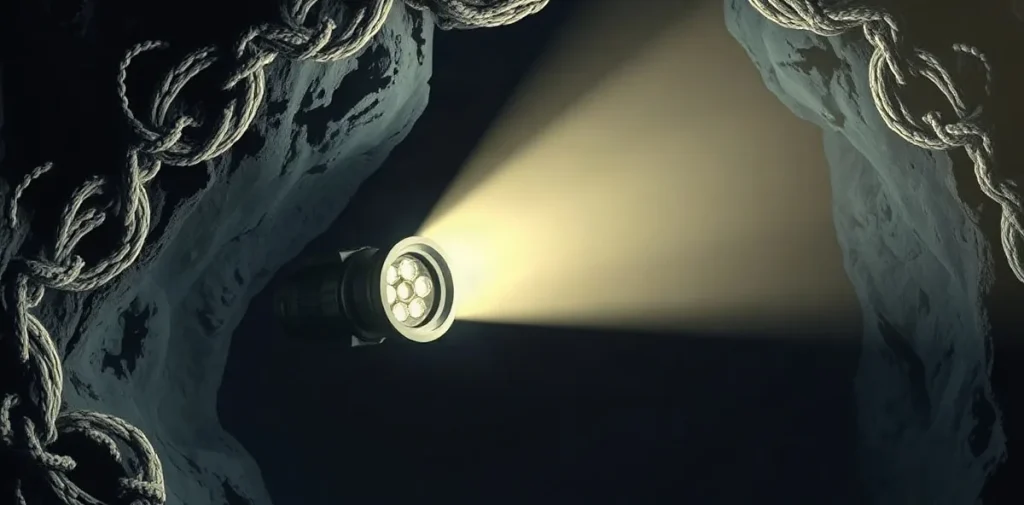
Dive lights for night and cave diving must balance brightness, battery longevity, beam focus, and robustness to ensure safety and visibility in challenging underwater environments. The best options in 2026 offer between 1,000 and 3,500 lumens, runtimes from 3 to 12 hours, tailored beam profiles, and rugged, pressure-resistant housing rated to 100 meters or more.
What brightness levels are optimal for night and cave diving?
Brightness in dive lights is measured in lumens and directly impacts underwater visibility. Night and cave divers typically require lights producing between 1,000 and 3,500 lumens to illuminate their surroundings without excessive backscatter from particulate matter.
Brightness range and its effects
- Under 1,000 lumens: Suitable for close-up tasks but insufficient for exploring large cave sections.
- 1,000–2,500 lumens: Considered the sweet spot for most cave divers, providing clear visibility and manageable battery consumption.
- Above 3,000 lumens: Best for wide-area illumination but can cause more backscatter and faster battery drain.
The Bigblue AL1200 is rated at 1,200 lumens and offers a focused beam ideal for tight caves, while the Underwater Kinetics SL4 eLED delivers 3,200 lumens with adjustable beam intensity for varied conditions.
How does battery life influence dive light choice?
Battery life determines how long a dive light can operate before requiring a recharge or battery swap, critical for extended night or cave dives. Most modern dive lights in 2026 offer runtimes between 3 and 12 hours depending on brightness settings.
Battery types and runtime considerations
- Li-ion rechargeable batteries: Common in high-end models, providing 6 to 12 hours at mid-level brightness.
- Alkaline batteries: Less common now due to shorter runtimes and environmental concerns, typically under 4 hours at full power.
The Light & Motion Sola Dive 1200 offers a 7-hour runtime at full brightness with a lithium-ion battery, whereas the Scubalamp Bigshot 3000 can run up to 9 hours on a single charge with adjustable output modes.
What beam patterns best suit underwater navigation and exploration?
Beam pattern affects how the light spreads underwater, influencing a diver’s ability to see detail and navigate. Common beam types include spot, flood, and adjustable beams.
Beam pattern types and applications
- Spot beams: Narrow and intense, ideal for focusing on distant objects or tight areas.
- Flood beams: Wide-angle beams for general area illumination, useful in open water or large cave chambers.
- Adjustable beams: Allow divers to switch between spot and flood, providing versatility.
The Hog Wild Designs Big Hog 2 features an adjustable beam from 20 to 60 degrees, offering flexibility for varying conditions, while the OceanLED Dive Light delivers a wide flood beam for broad visibility.
Which dive light designs provide the best durability and robustness?
Durability is essential for dive lights, as they must withstand water pressure, impacts, and corrosive saltwater environments. Materials like aircraft-grade aluminum and durable polycarbonate housings are standard for robust models.
Durability criteria to consider
- Depth rating: Most lights are rated for 100 meters or more; some professional models exceed 150 meters.
- Impact resistance: Shock-resistant designs protect internal components during rough handling.
- Sealing: O-ring and gasket seals prevent water ingress and maintain pressure resistance.
The Bigblue AL1200 is rated to 150 meters depth with a tough anodized aluminum body, while the Light & Motion Sola Dive 1200 has IPX8 waterproof certification and impact-resistant polycarbonate housing.
How do price and value compare among leading dive lights?
Dive light prices vary according to brightness, battery technology, and build quality. In 2026, prices range from around $100 for entry-level models to over $600 for professional-grade lights.
Comparison of popular dive lights by price and features
| Model | Brightness (lumens) | Battery life (hours) | Beam pattern | Depth rating (m) | Price (USD) |
|---|---|---|---|---|---|
| Bigblue AL1200 | 1,200 | 6 | Spot | 150 | ~$250 |
| Light & Motion Sola Dive 1200 | 1,200 | 7 | Flood | 100 | ~$400 |
| Underwater Kinetics SL4 eLED | 3,200 | 3.5 | Adjustable | 100 | ~$350 |
| Hog Wild Designs Big Hog 2 | 1,700 | 5 | Adjustable | 130 | ~$600 |
| Scubalamp Bigshot 3000 | 3,000 | 9 | Spot | 120 | ~$300 |
- 1,000–3,500 lumens typical brightness range for night and cave diving
- 3 to 12 hours battery runtime across popular dive lights
- 100–150 meters common depth rating ensuring pressure resistance
- $100–$600 price range reflecting features and build quality
Frequently asked questions
Can I use a dive light with a wide flood beam in tight cave passages?
How often should I replace dive light batteries?
Is it necessary to have multiple dive lights for cave diving?
Do more lumens always mean better visibility underwater?
Key takeaways
- Optimal dive lights for night and cave diving offer 1,000 to 3,500 lumens for effective illumination.
- Battery life varies from 3 to 12 hours; rechargeable lithium-ion batteries dominate the market.
- Beam patterns should match diving conditions: spot for narrow passages, flood for wide areas, adjustable for versatility.
- Durability includes depth ratings of 100+ meters and robust, corrosion-resistant materials.
- Price ranges from $100 entry-level to $600+ for professional-grade lights, with features scaling accordingly.
Conclusion
Choosing the right dive light for night and cave diving hinges on balancing brightness, battery endurance, beam pattern, and durability. Models like the Bigblue AL1200 and Light & Motion Sola Dive 1200 exemplify strong options with reliable performance and reasonable pricing. Divers should prioritize lights with sufficient lumens for their environment, ensure battery life exceeds dive durations, and opt for rugged construction rated to appropriate depths. Selecting a dive light that matches specific diving conditions enhances safety and exploration success in challenging underwater environments.