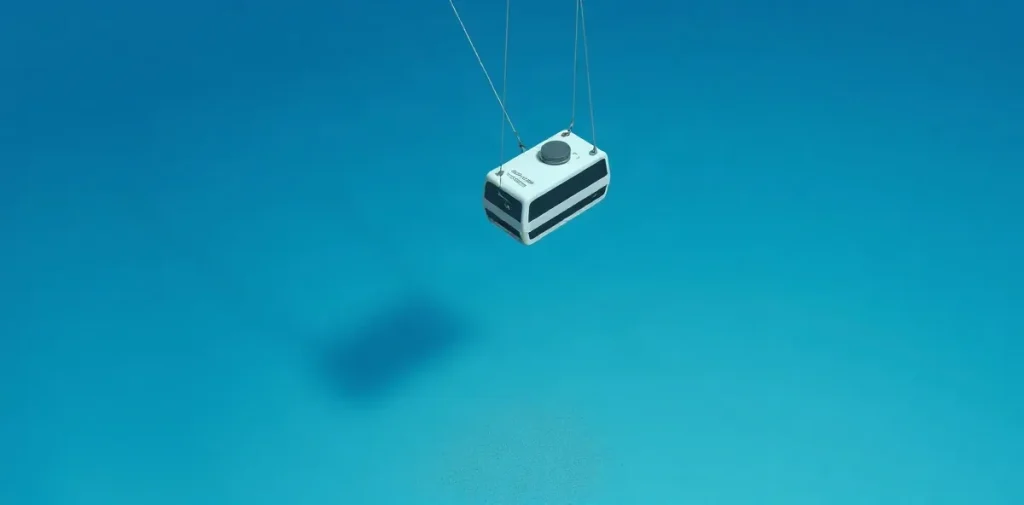
Ocean engineering and marine science examine how to observe, measure and work in the sea. Their questions range from how instruments function underwater to how currents, pressure and visibility shape fieldwork. For divers, this research matters because safe, useful observations depend on understanding both the environment and the equipment used to study it.
What does ocean research examine underwater?
Research in the ocean often combines physical measurements, biological observations and engineered systems. Investigators may need to locate a feature, collect a sample or record a signal while water movement, depth and limited visibility complicate the task.
Underwater work is not simply a land-based method moved below the surface. Water absorbs and scatters light, sound travels differently than in air, and pressure increases with depth. Currents can move instruments or divers away from a planned position, while temperature and salinity can affect sensors and the surrounding water.
Why do pressure and the water column matter?
Pressure is a central constraint in underwater research. As a diver descends, ambient pressure rises; breathing gas delivered at that pressure is denser, and gas spaces in the body and equipment respond to changes in pressure. These principles influence both the diver’s physiology and the design of instruments taken underwater.
The water column also changes what researchers can observe. Light diminishes with depth and turbidity, while sound can carry over long distances and reflect from boundaries between water layers. A scientific method therefore has to suit the signal being measured: optical imaging, acoustic sensing and direct sampling answer different questions.
How are observations collected and checked?
Ocean studies use instruments chosen for the target and conditions. A diver may make direct observations or handle equipment, while remote sensors and platforms can gather measurements where people cannot remain safely or efficiently. Each approach has trade-offs in access, resolution, disturbance and the ability to verify what an instrument records.
- Position and movement: track where observations were made and whether currents shifted the sampling point.
- Instrument performance: check calibration, depth limits, sealing and how pressure or temperature may affect readings.
- Environmental conditions: record visibility, current, depth and water properties that affect interpretation.
- Repeatability: use consistent procedures so observations can be compared across locations or visits.
Good fieldwork also separates what was directly observed from what is inferred. A sensor reading needs context: its location, operating condition and measurement limits determine what the result can support.
What does this mean for divers and clinicians?
Scientific divers work at the intersection of research aims and human limits. A task can involve carrying equipment, maintaining a stable position or concentrating on measurements while managing buoyancy and gas supply. Those demands matter when planning the dive, even if the research question itself is not medical.
For diving physicians and hyperbaric clinicians, the broader setting helps frame exposure. Depth, duration, workload, thermal conditions and breathing gas are relevant to physiological stress and decompression planning. Any medical concern about fitness to dive or symptoms after a dive calls for assessment by a diving-medicine physician; general descriptions cannot replace individual evaluation.
How does ocean engineering connect to diving science?
Ocean engineering and diving science meet wherever people, instruments and the underwater environment interact. Engineering addresses how equipment withstands pressure and gathers usable information; physiology addresses how divers respond to pressure, breathing gas, exertion and time underwater. Neither perspective alone captures the full problem of conducting reliable work beneath the surface.
This connection makes methods as important as research questions. A measurement is useful only when the instrument’s behaviour is understood and the conditions of collection are recorded. For a diver, the practical question is whether the planned task, equipment and exposure fit the environment and the team’s capabilities.
Frequently asked questions
Why use divers instead of remote instruments?
Does ocean research always involve diving?
What should a scientific diver consider before a task?
An original research-library explainer written by the Rubicon editors. It is not a summary of a specific publication.
Related reading on Rubicon
- Why Divers Get Cold Faster Underwater
- Diving: Science, Practice, and Destinations
- Scuba Diving Equipment: Essential Gear for Every Diver
- Diving Science: Key Physiological and Environmental
- Ocean Engineering and the Science of Diving
- Brain Lesions and PFO in Sport Divers
- More on Diving Science
- Browse the Research Library