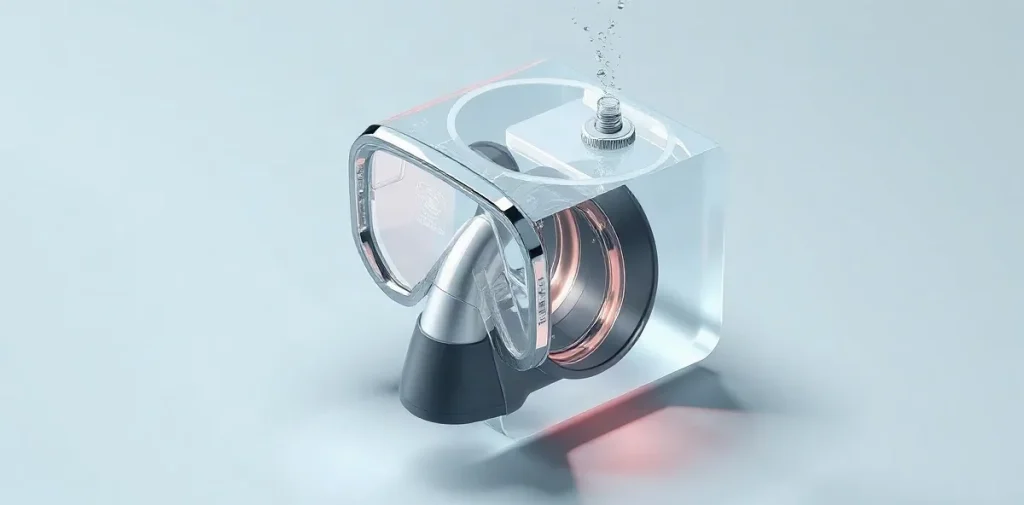
Added respiratory dead space is the extra volume in breathing equipment or a breathing pathway where exhaled gas can be inhaled again. In diving, this can increase carbon dioxide retention and breathing effort. Understanding how dead space interacts with underwater conditions matters both when assessing a diver’s physiology and when evaluating equipment.
What does respiratory dead space mean underwater?
Not all air reaching the lungs participates effectively in gas exchange. Air occupying conducting airways does not directly exchange oxygen and carbon dioxide with blood; equipment can add another volume in which exhaled gas remains available for the next breath. This added volume is called apparatus or added dead space.
When a diver breathes from a system with added dead space, some carbon-dioxide-rich gas may be rebreathed. The amount of rebreathing depends on the equipment’s design, the breathing pattern and how gas moves through the system. Dead space is therefore not simply a fixed property of a mask or mouthpiece in isolation.
Underwater, breathing conditions differ from those at the surface. Gas density rises with pressure, and the regulator or breathing apparatus adds resistance and changes the work required to move gas. These factors can interact with dead space, making the same breathing arrangement more demanding during a dive than during an ordinary surface test.
Why does carbon dioxide matter to a diver?
Carbon dioxide is a normal product of metabolism, and ventilation removes it from the body. If a diver retains more carbon dioxide, the body’s drive to breathe can rise, and symptoms may include breathlessness, headache, confusion or impaired judgment. The severity and presentation vary; these symptoms are not specific to carbon-dioxide retention.
In diving, impaired judgment or excessive breathing effort can affect a diver’s ability to manage a task, respond to a problem or maintain a safe breathing pattern. Exertion, stress, equipment resistance and environmental conditions can all influence ventilation. Added dead space is one part of this wider physiological picture, not a stand-alone explanation for every breathing complaint.
For diving physicians, the subject connects respiratory physiology with equipment assessment and fitness to dive. A suspected breathing-related medical problem requires individual assessment; a diving-medicine physician can consider the diver, the equipment and the circumstances together.
How do researchers examine added dead space?
Research in this area asks how an added gas volume affects ventilation and carbon-dioxide handling, and whether its effects change under diving conditions. Work may compare breathing with and without an added volume, or assess how different breathing arrangements perform as pressure, workload or other test conditions change.
Measurements can include ventilation, breathing frequency, gas concentrations and physiological responses. Test design matters: a result depends on how the equipment is configured, the breathing task and the conditions used. Laboratory or controlled tests help isolate mechanisms, while operational questions concern how those mechanisms apply during actual use.
Personnel-selection testing raises a related question: whether responses to a defined breathing challenge can help characterize suitability for particular duties. That is not the same as diagnosing disease or predicting every diver’s performance. Selection measures need to be interpreted in the context of the task and the conditions the person may encounter.
Which factors shape the effect?
The practical significance of added dead space depends on several connected features. Important concepts include:
- Dead-space volume: the extra gas volume that can contain exhaled gas available for rebreathing.
- Ventilation: the movement of air in and out of the lungs, which affects carbon-dioxide removal.
- Breathing resistance: the effort required to move gas through the breathing apparatus.
- Gas density and pressure: conditions that change as a diver descends and can affect respiratory work.
- Workload and breathing pattern: exertion and the timing or depth of breaths can alter ventilation and gas exchange.
These factors interact rather than acting independently. A breathing arrangement that is acceptable at rest may impose a different burden during exertion or at depth. Equipment configuration and the intended use therefore matter when interpreting physiological tests.
Where does this research fit in diving medicine?
Research on respiratory dead space belongs to a broader effort to understand how the human respiratory system and breathing equipment function together under pressure. It sits alongside studies of gas density, regulator performance, breathing resistance, carbon-dioxide retention and human performance. The common concern is how to distinguish the contribution of equipment from the diver’s response and the surrounding conditions.
That distinction has practical value for equipment evaluation, controlled selection tests and clinical assessment. A test can illuminate a physiological mechanism without automatically setting a universal limit for all equipment or divers. When applying a result to a particular dive, the task, apparatus and environmental conditions need to match the question being asked.
Frequently asked questions
Is added dead space the same as breathing resistance?
Can a diver tell from symptoms that dead space is the cause?
Why test breathing systems under diving conditions?
An original research-library explainer written by the Rubicon editors. It is not a summary of a specific publication.
Related reading on Rubicon
- The Diving Reflex: What Happens Underwater
- Scuba Diving Fins: Split vs. Paddle Designs
- Scuba Diving Regulators: Balanced vs. Unbalanced
- Scuba Diving Buddy Checks: Catch Problems Early
- Thesis Research in Diving and Hyperbaric Medicine
- HPNS Suppression in Deep Human Dives: Research Summary
- More on Diving Science
- Browse the Research Library