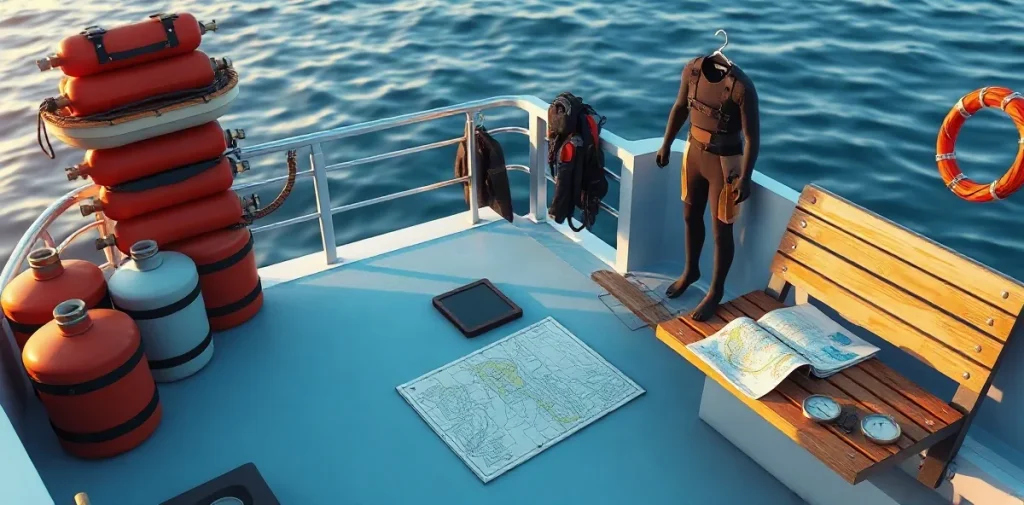
Liveaboard diving is a dive trip built around life at sea: you sleep, eat, and dive from the same vessel, which lets you reach remote sites and make the most of multiple dives in a day. The key to a smooth trip is simple: plan your route, pack only what you need, and dive with a clear understanding of the boat’s schedule, conditions, and safety routines.
That mix of logistics and freedom is what makes liveaboard diving so appealing, but it also means preparation matters more than on a land-based holiday. From luggage choices to kit checks and daily dive rhythm, the experience rewards divers who arrive organised and ready to adapt. For a wider look at how this fits into the bigger picture, see our guide «Diving: A Complete Guide to Types, Destinations, Gear, and Planning».
In the sections that follow, we’ll break down what to expect before you board, what to bring, and how to approach each dive so the trip feels efficient rather than rushed. The goal is straightforward: less guesswork, more time underwater, and a better liveaboard from the first briefing to the final ascent.
| Choice | Best for | Watch out for |
|---|---|---|
| Short liveaboard | Divers who want a quick offshore trip | Less time to justify travel and boarding logistics |
| 7-day liveaboard | Divers who want multiple dive cycles and more site variety | More dependency on weather, seasickness, and routine |
| Nitrox included | Divers doing repeated dives over several days | Only useful if you are trained and the boat supports it |
| Shore-based trip | Divers who want flexibility and fewer days at sea | More transfers and less time on remote sites |
- 3 to 7 days common liveaboard trip length
- 20 or more dives repetitive-dive volume where small organization mistakes start to matter
- 1 or 2 dives a low-volume trip where a liveaboard may not be good value
- 7 days a common itinerary length used for comparison
How does a liveaboard trip usually run?
Why the boat schedule matters
A liveaboard trip runs on repeated dive cycles over several days at sea, so the timetable is part of the experience, not just the backdrop. The day is usually built around briefings, gear setup, meals, dives, and surface intervals, with the boat moving the group from one cycle to the next.
That rhythm matters because the whole point of a liveaboard is to reach multiple sites without returning to port after every dive. When the best sites are far offshore, a multi-day boat can fit more diving into the trip and reduce the stop-start feel of shore-based logistics.
What makes it different from day diving
Day boats usually revolve around one or two dives before heading back, while a liveaboard is designed for a longer run of dives across several days. The result is less time spent commuting and more time organized around the next briefing, meal, or surface interval.
- Liveaboard: several days at sea, with repeated dive cycles and overnight stays on the boat.
- Day boat: a shorter outing that typically returns to port after the planned dives.
- Best fit: itineraries with far-off sites and multiple dives in a row, where the boat schedule is as important as the destination.
For a broader map of trip types and planning, see our guide “Diving: A Complete Guide to Types, Destinations, Gear, and Planning”.
What should you pack for a liveaboard?
Personal kit that earns its space
Pack your own mask, fins, exposure suit, and dive computer unless the liveaboard clearly provides rental gear; on a 3- to 7-day trip, the computer is the one item you should not compromise on because it tracks no-stop limits and surface intervals across repetitive dives.
- Mask, fins, and exposure suit: bring your own fit-critical gear first, so you are not adjusting unfamiliar equipment after the boat has already left port.
- Dive computer: carry the model you already know, since multi-day schedules depend on consistent tracking from dive to dive.
- Certification cards and logbook: keep both together for check-in and for recording the trip once the diving starts.
Small items that prevent deck chaos
A compact liveaboard bag should also hold a dry bag, reef-safe sunscreen, motion-sickness medication, and charging cables for your camera and computer. These are the small items that keep wet gear, electronics, and personal comfort under control when cabins and rinse areas are built for soft bags, not hard suitcases.
Choose luggage that compresses easily and leaves room in a tight cabin, because rigid cases are awkward on boats where storage is shared and rinse stations fill quickly. A soft-sided bag, plus the right cables and medications, makes the daily routine simpler on every dive day.
How do you choose the right boat and itinerary?
Boat features that change the experience
Choose the liveaboard that matches your diving style: wreck-focused boats suit wreck routes, reef boats suit reef days, drift-diving itineraries suit current-driven sites, and remote-site trips suit longer crossings and fewer alternative options. The best fit is the one whose daily diving pattern matches the kind of underwater time you want most.
- Nitrox: useful when the itinerary packs in multiple dives over several days.
- Guided dives: better if you want structure and local site management on every drop.
- Camera stations: important for divers carrying housings, strobes, and other photo gear.
- Tender support: helps when entries, exits, or site access depend on a smaller support boat.
- Cabin layout and deck space: matter most on longer trips, when crowded gear handling becomes tiring.
- Number of divers on board: affects how busy the deck feels from the first dive to the last.
Itinerary length versus travel cost
A 7-day itinerary is the standard comparison point for liveaboard planning, because it gives enough time to judge whether the boat, route, and onboard rhythm are worth the travel effort. Shorter 3- to 4-day trips can be easier to fit into a schedule, but they usually leave less margin for long transfers and fewer total dive opportunities.
If your destination requires significant travel time, the longer option often makes the journey feel more worthwhile because the diving window is broader and the pace is less compressed. If access is simple and your goal is a quick escape, a 3- to 4-day trip can be the cleaner choice.
How do you stay organized on board day after day?
A repeatable gear routine
Stay organized by putting the same items in the same place every day: regulator, BCD, dive computer, SMB, and cutting tool should all return to a fixed layout after each dive. That routine cuts down on forgotten clips, crossed hoses, and last-minute searching when the boat is moving and the deck is crowded.
- Regulator: keep it in one designated spot so the mouthpiece and hoses are easy to check before entry.
- BCD: stow it the same way each time to make inflator and buckle checks faster.
- Computer, SMB, cutting tool: place them together so the most safety-critical backup items are always where you expect them.
Rinse and dry equipment promptly after each dive so salt does not collect on zippers, straps, and buckles. If you shoot underwater photos or video, recharge batteries as soon as possible and label memory cards clearly before the next dive day begins.
Why small habits matter at sea
On a liveaboard, repeated dives turn tiny slips into bigger problems over 20 or more dives, especially when briefings happen every day and the schedule stays tight. Treat the boat’s briefing times seriously, because one missed detail can affect the next entry, the next ascent, and the next equipment check.
- Daily briefing: treat every session as mandatory, even if the dive site looks familiar.
- 20+ dives: assume small errors can accumulate across the trip if you do not reset your routine.
When does liveaboard diving not make sense?
Who should think twice
Liveaboard diving is a poor fit if you get severe seasickness, because several days offshore can turn an exciting trip into a miserable one. It is also a weak match for divers who only want one or two easy dives: the boat price is built around multiple days at sea, not a quick hop for a single outing.
- Seasickness: several days offshore can be hard to tolerate if motion already affects you strongly.
- Dive count: one or two easy dives rarely justify a multi-day boat.
- Skill level: if certification, buoyancy, or air consumption is still developing, a calmer setting is usually the better first step.
When a land-based trip is the smarter choice
A shore-based trip makes more sense when you want flexibility, because a liveaboard’s route and schedule are fixed once departure begins. That matters if you prefer to change plans day by day, skip a dive, or choose a quieter pace while your comfort in the water improves.
Resort-based diving is often the better bridge for newer divers and for anyone who does not want a full boat itinerary. It lets you build confidence before committing to the tighter rhythm of a liveaboard, where the pace is set in advance and the whole trip is designed around volume.
How do you get the most value from multiple days at sea?
Value is more than the ticket price
The best value comes from a liveaboard itinerary that balances site quality, transfer time, and what is already included, rather than the lowest headline fare. A cheaper route can lose its appeal if it adds long crossings, fewer dives, or extra charges for nitrox, while a slightly pricier trip may deliver better diving and less wasted time at sea.
- Itinerary quality: prioritize routes with the sites you actually want, not just the lowest fare.
- Nitrox: ask whether enriched air is included or charged separately before you book.
- Backup gear: pack spare masks, O-rings, and charging leads because offshore replacements are limited.
Travel timing can make or break the trip
Plan the first and last travel days as part of the dive trip itself, because a delayed flight can cost you the boarding window or force you to surface too soon after the final dive. Build in extra time on both ends so you are not trying to connect tight flights, check in late, or rush straight from the boat to the airport.
That buffer matters even more on multi-day schedules with repeated dives, when tiredness and logistics stack up quickly. If your trip includes a busy diving rhythm, the extra day before departure and the extra day after the final dive can protect the whole itinerary from one delay.
Frequently asked questions
How many days is a liveaboard trip usually?
Do I need my own dive computer?
What is the biggest packing mistake?
Is nitrox worth it on a liveaboard?
Key takeaways
- Liveaboard success depends on routine: the same gear, the same checks, every day.
- A dive computer and compact luggage matter more than extra clothing.
- Trip length, boat layout, and nitrox availability can matter more than headline price.
- Liveaboards reward divers who are comfortable with repeated dives and fixed schedules.
