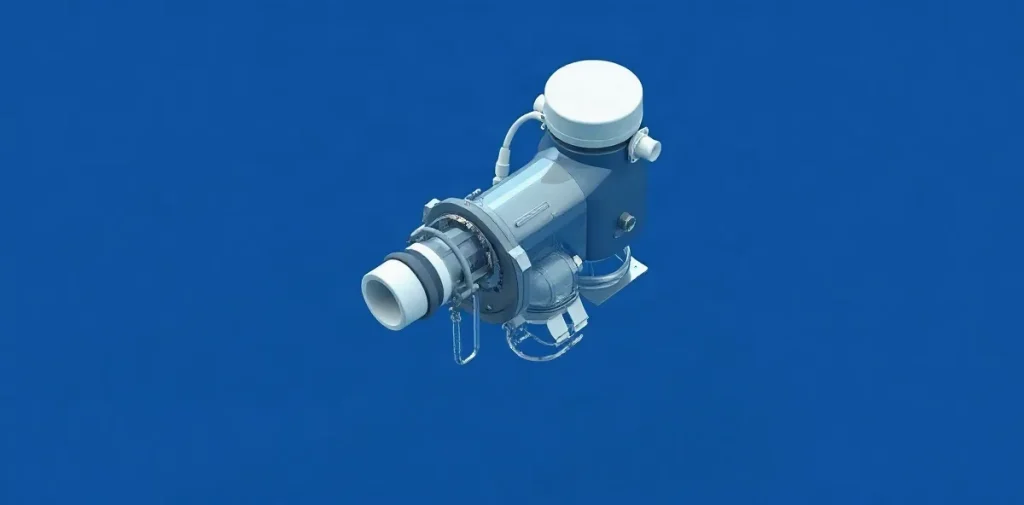
Rebreathers is a 2003 publication by Goble in SPUMS Journal 2003 Volume 33 Number 2. Its subject is technology that recycles a diver’s breathing gas, a system with important implications for gas management, physiology and safety underwater.
How does a rebreather work?
Unlike open-circuit equipment, which releases each exhaled breath into the water, a rebreather routes exhaled gas through a breathing loop for treatment and reuse. A scrubber removes carbon dioxide, while oxygen must be maintained in the loop and the gas mixture managed for the planned dive.
Because the diver breathes from a loop, its contents are not simply the same as the surrounding water or a fresh gas supply. Equipment design and operation must account for changing oxygen and carbon-dioxide levels, breathing resistance, gas volume and the demands of depth and exertion.
Why do oxygen and carbon dioxide matter?
The body needs oxygen for metabolism, but breathing gas must also remain within limits appropriate to the pressure and conditions of a dive. Too little oxygen can impair consciousness and function; excessive oxygen pressure can cause toxicity. These hazards make reliable sensing, gas addition and disciplined monitoring central concerns.
Carbon dioxide is produced by the body and must be removed from the breathing gas. If the scrubber is ineffective, exhausted or incorrectly used, carbon dioxide can accumulate. Elevated carbon dioxide can cause distress and impair a diver’s ability to respond, while also interacting with the physiological stresses of immersion and exertion.
- Gas composition: oxygen availability and the consequences of changing pressure.
- Carbon-dioxide removal: scrubber function and the integrity of the breathing loop.
- Loop mechanics: gas volume, resistance and the work required to breathe.
- Human factors: monitoring, preparation, task load and response to a malfunction.
What makes rebreather diving a distinct safety problem?
Rebreathers can conserve gas and reduce bubbles compared with open-circuit breathing, features relevant to extended or specialised diving. Those capabilities come with a more complex system: the diver depends on components working together, and a problem may not be as immediately obvious as the loss of an open-circuit gas supply.
Risk therefore involves both hardware and human performance. Pre-dive checks, correct assembly and use, maintenance, training and a plan for responding to faults all matter. A diver also needs to recognise symptoms that may reflect a breathing-gas problem and act without adding avoidable task loading.
How does the subject connect to dive medicine?
For diving physicians and hyperbaric clinicians, rebreather use brings together respiratory physiology, oxygen toxicity, carbon-dioxide retention and the effects of pressure. Clinical assessment may need to consider the dive profile, the equipment and the diver’s symptoms together, rather than treating the breathing apparatus as incidental context.
The topic also sits within the broader development of diving technology. As equipment enables different profiles and missions, research and clinical practice must consider how changes in gas delivery affect both physiological exposure and operational risk. The central questions span engineering, physiology, training and emergency response.
What should readers take from the subject?
Rebreather systems are best understood as life-support equipment whose safe function depends on controlled gas composition and effective carbon-dioxide removal. Their potential advantages do not remove the need to understand the loop, monitor it appropriately and prepare for failures.
This background is useful to recreational and scientific divers, as well as clinicians evaluating diving-related illness. It is general education, not individual medical advice. Anyone with a health concern related to diving or rebreather use should consult a diving-medicine physician.
Frequently asked questions
What is the main difference between a rebreather and open-circuit equipment?
Why is carbon-dioxide removal important?
Who may find this subject relevant?
Citation details
- Title: Rebreathers
- Authors: Goble, S
- Year: 2003
- Published in: SPUMS Journal 2003 Volume 33 Number 2
- Identifiers: 0813-1988
- Repository record: Rubicon Research Repository, handle 123456789/7782
This page is an original summary written by the Rubicon editors from the publication’s bibliographic record. It does not reproduce the paper, its abstract or its data; consult the publication itself for its methods and findings.
Related reading on Rubicon
- Diving: Science, Practice, and Destinations
- Diving Science: Key Physiological and Environmental
- Diving: Exploring Underwater Activities, Science, and Safety
- The Science of Diving SSI: Education and Physiology Insights
- HPNS Suppression in Deep Human Dives: Research Summary
- Flying After Diving: Research Summary
- More on Equipment
- Browse the Research Library
