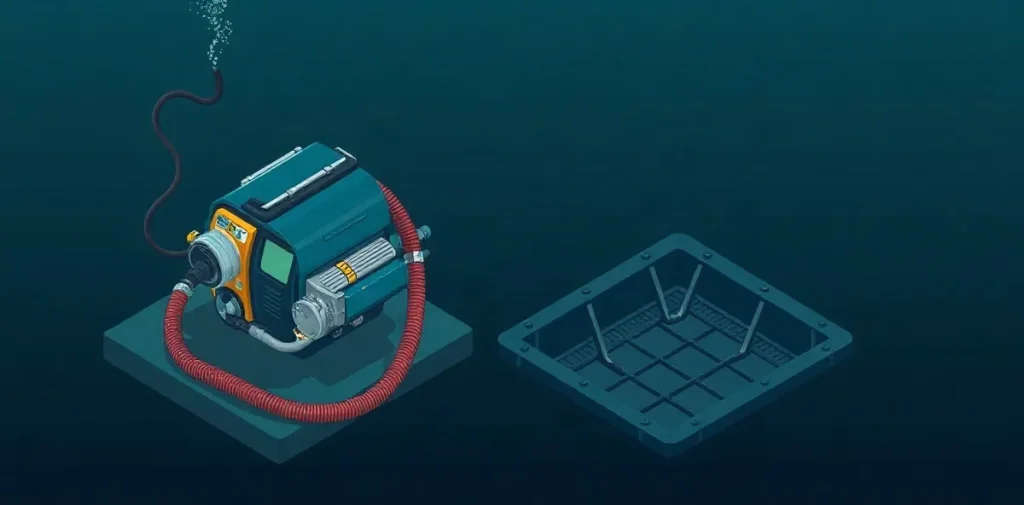
Underwater mine apparatus research examines how a diver’s breathing system and supporting equipment work in demanding underwater tasks. The subject matters because life support must function reliably while the diver works, navigates and manages physical and environmental stress; equipment design and human performance cannot be assessed separately.
What questions shape underwater apparatus research?
The central question is how a complete diving system supports a person underwater while meeting the task’s practical demands. Researchers and engineers consider the breathing apparatus alongside its interfaces with the diver, the working environment and the equipment needed to carry out the dive.
That means looking beyond whether a device supplies breathing gas. Relevant questions include whether the diver can breathe comfortably during exertion, whether the equipment restricts movement or visibility, and how its components behave together during routine operation and foreseeable problems.
Why does equipment integration matter?
A breathing apparatus is part of a larger system. Its performance depends on the fit and arrangement of components, the diver’s workload, the surrounding water and the procedures used to operate and maintain the equipment. A design that works well in one configuration may create different demands when combined with other gear or used for a different task.
Underwater mine work also brings a task-focused perspective: the diver needs to perform useful work while remaining supported by the life-support system. Equipment evaluation therefore considers both technical function and the human factors that shape safe, effective use. Familiarity, training and clear procedures matter alongside mechanical design.
How do physiology and engineering meet?
Breathing underwater differs from breathing at the surface because the apparatus and surrounding pressure affect the work of breathing. Work of breathing is the effort needed to move gas into and out of the lungs. It can become more demanding with exertion, increased gas density at depth, resistance in the breathing circuit or an unfavourable equipment configuration.
These factors connect apparatus research with respiratory physiology and dive medicine. A diver’s response depends on the interaction between the person, the breathing system and the task, so technical assessment and physiological observation address different parts of the same problem. Researchers may examine breathing performance, workload, operational handling and equipment reliability under conditions relevant to the intended use.
- Breathing performance: how the apparatus supports ventilation as the diver works.
- Human factors: how fit, movement, visibility and task demands affect use.
- System reliability: how components and procedures support continued operation.
- Operating conditions: how pressure, water environment and exertion affect the diver-system interaction.
What can this research contribute to dive safety?
Equipment research helps identify where design, training and operating procedures need to work together. A technically capable apparatus is not enough if it is difficult to manage under workload, poorly matched to the task or not maintained as intended. Conversely, sound procedures depend on equipment whose operation and limitations are understood.
For diving physicians and hyperbaric clinicians, the equipment context can help frame questions about a diver’s exposure and symptoms. Breathing difficulty, fatigue or impaired performance may involve physiological strain, equipment function or both. Clinical assessment should take the dive profile, apparatus and circumstances into account; personal medical decisions belong with a diving-medicine physician.
How does apparatus research fit into diving science?
Research on underwater apparatus sits at the intersection of engineering, human performance, diving physiology and operational safety. It complements work on decompression and breath-hold diving, which address other major parts of the underwater environment. Together, these fields ask how pressure, breathing, equipment and human limits shape the risks and capabilities of a dive.
The practical value is not confined to one kind of diver. Scientific divers, military divers and other people working underwater all rely on life-support systems that must suit their tasks and conditions. When assessing any apparatus, the key questions are what it is designed to support, how it behaves under workload and how the diver is trained to use it.
Frequently asked questions
What does underwater mine apparatus research study?
Why is breathing work important when assessing dive equipment?
Who should assess a health concern after a dive?
An original research-library explainer written by the Rubicon editors. It is not a summary of a specific publication.
Related reading on Rubicon
- The Science Behind Dive-Induced Immune System Modulation
- How Rebreather Systems Optimize Gas Use and Extend Dive Time
- The Diving Reflex: What Happens Underwater
- Dive Computers: Air Integration vs. SPG
- Canadian Underwater Mine Apparatus and CUMA Dive System
- Hydrodynamic Drag in Underwater Swimming
- More on Equipment
- Browse the Research Library