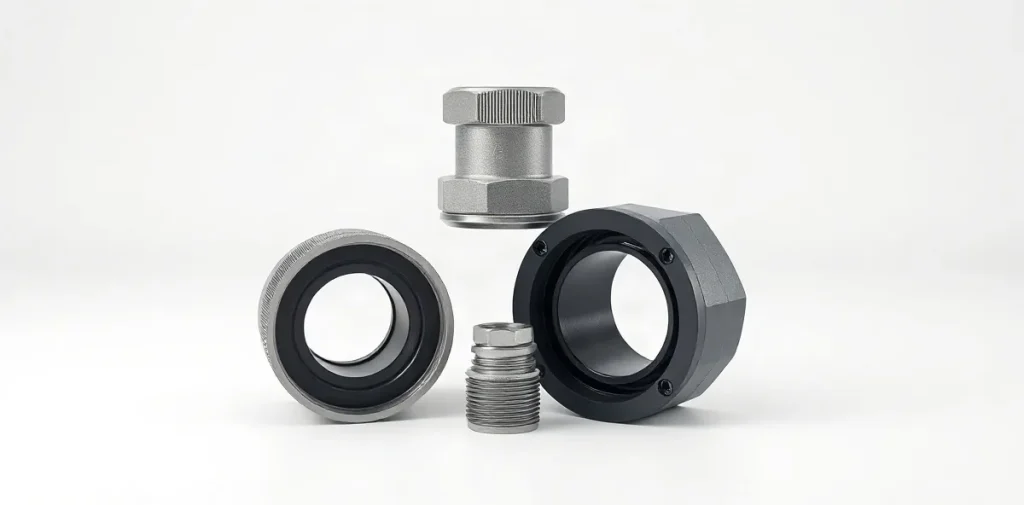
DIN regulators fit tanks with a threaded connection; yoke regulators fit tanks with a valve designed for a clamp-on connection. Which one fits your tank depends on its valve, so check the valve type before choosing a regulator.
The distinction is about how the regulator attaches, not which system is universally better. This guide to DIN vs. yoke regulators explains how to identify the connection on your tank and what to consider when matching it to a regulator.
| Criterion | DIN first stage | Yoke first stage |
|---|---|---|
| Connection | Threads into a compatible valve outlet | Clamps over a compatible valve |
| Direct match | DIN valve outlet | Yoke-style valve |
| Mismatch option | Suitable yoke-to-DIN adapter for some yoke valves | Suitable DIN-to-yoke adapter for some DIN valves |
| Key check | Valve compatibility and pressure rating | Valve compatibility and pressure rating |
- 2 connection styles DIN and yoke are the two regulator-to-valve connection types compared here.
- 0 direct fit A yoke regulator does not directly attach to a DIN-only valve outlet.
- 2 adapter directions DIN-to-yoke and yoke-to-DIN adapters serve different connection combinations.
How do DIN and yoke first stages connect to a cylinder?
A DIN first stage screws into a threaded cylinder-valve outlet, with the regulator’s O-ring sealing inside the valve; a yoke first stage clamps over the outlet, with its O-ring sealing against the valve face. The difference is where each regulator connects and where its O-ring makes the seal.
Check the valve before choosing a regulator
A DIN connection describes a threaded regulator-to-valve fitting, not a cylinder’s pressure rating. The word “DIN” alone therefore does not tell you the pressure rating of a cylinder or valve.
- DIN: Look for a threaded outlet compatible with the regulator. If the outlet is not compatible, use only a correctly fitted adapter.
- Yoke: Check that the cylinder valve has an outlet the yoke clamp can fit over and that its face can seal against the regulator’s O-ring.
Identify the cylinder-valve opening before buying either type. A DIN regulator needs a compatible threaded outlet or a correctly fitted adapter; a yoke regulator needs a valve outlet that accepts its clamp. Don’t infer compatibility from the cylinder’s pressure rating or from the label “DIN” alone.
Which cylinder valves accept DIN or yoke regulators?
Match the regulator to the valve.
A yoke regulator fits a compatible yoke-style cylinder valve directly, while a DIN regulator fits a compatible DIN outlet; adapters can bridge some, but not all, combinations. The valve’s markings and rated pressure—not the fitting shape alone—determine whether a setup is suitable.
- Yoke regulator + yoke-style valve: The regulator attaches without an adapter when the valve is compatible.
- DIN regulator + yoke-style valve: A yoke-to-DIN adapter may allow use with some yoke valves.
- Yoke regulator + DIN valve: A DIN-to-yoke adapter may let the regulator attach to some DIN valves; check that both the valve and adapter support the combination.
- DIN regulator + DIN outlet: The regulator fits a compatible DIN outlet directly.
Check the cylinder’s markings.
Before connecting a regulator, read the cylinder valve’s markings and confirm its rated pressure against the regulator and any adapter. Do not assume that a fitting that physically attaches establishes pressure compatibility. If the markings or the adapter’s compatibility are unclear, do not use the combination until they have been verified.
When does a DIN regulator make more practical sense?
A DIN regulator makes practical sense when your cylinder has a compatible DIN outlet, because its threaded first stage sits inside the valve and keeps the regulator O-ring within the valve interface rather than exposed on the valve face. That connection is a direct fit for a DIN-outlet cylinder; it does not require an adapter.
Check the valve, especially when travelling
DIN and yoke are not universally interchangeable: the relevant check is the fitting on the actual cylinder, not the destination’s name or the assumption that a rental shop will use one system. Before travelling or renting, confirm whether the available cylinders have DIN or yoke valves.
- Compatible DIN outlet: A DIN first stage connects directly, without a separate valve adapter.
- Some yoke valves: A suitable adapter can let a DIN regulator connect, but it is an extra component to carry and check before diving.
Why might a diver choose a yoke regulator instead?
A diver might choose a yoke regulator when using cylinders with compatible yoke valves, because its first stage attaches directly without a DIN-to-yoke adapter. Choosing a matching yoke first stage can therefore avoid carrying that extra piece of equipment.
Check the valve connection before renting
Yoke compatibility is not universal: a yoke clamp cannot attach directly to a DIN-only outlet. Before renting, confirm that the supplied regulator and cylinder valve use matching connections.
- Yoke regulator: attaches directly to a compatible yoke valve; no DIN-to-yoke adapter is needed for that connection.
- DIN-only outlet: cannot accept a yoke clamp directly, so check compatibility before choosing or renting equipment.
What are the limits of adapters and common compatibility mistakes?
DIN and yoke adapters solve a connection mismatch; they do not change a cylinder valve’s pressure rating or make an incompatible valve safe. Before connecting a DIN regulator, yoke regulator, or adapter, check both the regulator fitting standard and the pressure rating marked on the cylinder valve against the equipment’s markings.
Check the seal and the rating.
A DIN-to-yoke adapter and a yoke-to-DIN adapter serve different combinations, so do not assume an adapter works in both directions. Choose one only when its fittings match the regulator and valve you are joining, and confirm that the valve’s pressure rating is suitable for the equipment.
- DIN or yoke fitting: Match the regulator connection to the valve or adapter connection.
- Cylinder valve pressure rating: Verify the marking separately; an adapter does not raise or alter it.
Before diving, inspect the O-ring and the sealing surfaces for damage, dirt, or a poor fit; a mismatched or badly seated O-ring can leak. Connect the assembly securely and check for a leak before entering the water. If the seal or fit is uncertain, do not dive with that setup.
What should you check before buying or renting a regulator?
Before buying or renting a regulator, check the cylinder valve’s markings and match its outlet—DIN or yoke—to the regulator’s first stage. Then verify the regulator’s pressure rating and the cylinder valve’s pressure rating separately: a DIN or yoke connection identifies the fitting, not the pressure rating.
Check the fitting and pressure ratings
- DIN: Confirm that the valve outlet and first stage use compatible DIN connections; check their markings rather than relying on appearance alone.
- Yoke: Confirm that the cylinder valve has a yoke-compatible outlet and that the regulator’s first stage fits it directly.
- Pressure rating: Read the rating on both the regulator and the valve. Do not assume that matching connection styles mean their pressure ratings also match.
For an adapter, check that it is specified for the exact regulator-and-valve combination, then inspect its O-ring and threads for damage before use. When renting, ask for a regulator that directly matches the supplied cylinder valve; if the shop relies on an adapter, confirm that the correct one is available and fits the specific combination.
Frequently asked questions
What should I ask a dive shop before renting?
Key takeaways
- DIN screws into a compatible threaded valve outlet; yoke clamps over a compatible valve face.
- Adapters bridge particular DIN–yoke mismatches but do not change a cylinder’s pressure rating.
- Check the valve markings, regulator rating and sealing surfaces before diving.
- For rentals, confirm the cylinder-valve connection rather than assuming the regulator will fit.
