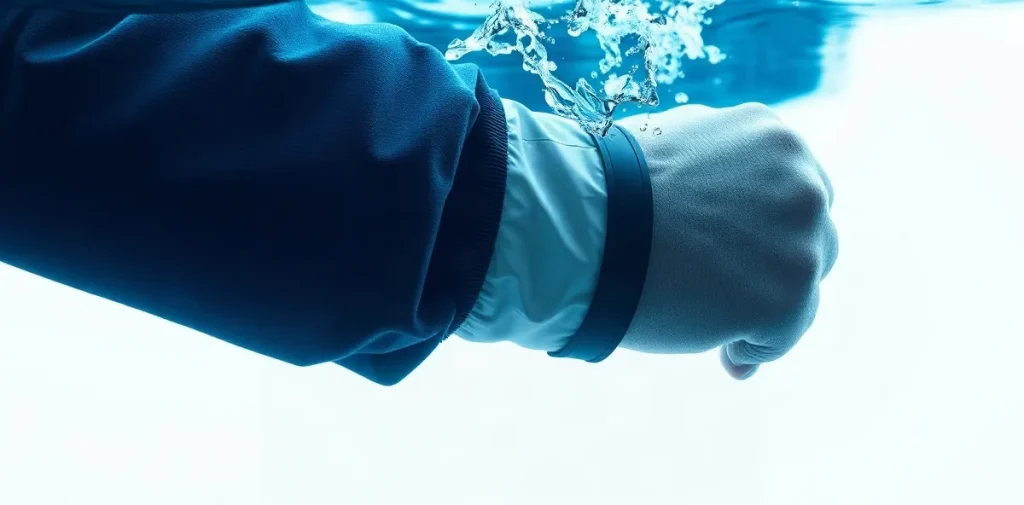
Thermal protection for divers is the study and practice of limiting heat loss in water while preserving safe movement and effective equipment use. Exposure suits matter because water draws heat from the body far faster than air, and a diver’s thermal state can affect comfort, physical performance and the capacity to respond to problems.
Why does a diver lose heat underwater?
The body continually produces heat, while the surrounding water carries heat away from the skin. Water conducts heat much more effectively than air, so immersion can cause cooling even when the water does not feel very cold at first. The rate of heat loss also depends on exposure time, water movement, depth and the diver’s activity.
As the body cools, blood flow to the skin and extremities changes as part of its effort to protect core temperature. Shivering can increase heat production, but it also raises exertion and can interfere with precise tasks. More substantial cooling can impair coordination, judgment and the ability to manage equipment—concerns that matter during both routine dives and emergencies.
How do exposure suits provide thermal protection?
A suit reduces heat transfer between the body and the water. Different suit designs do this in different ways: some rely on material that traps insulating gas, while others limit the exchange of water around the body. Fit, construction, seals and the condition of the suit all influence how well it works in practice.
Protection is not simply a matter of choosing the thickest or most insulating suit. A diver needs enough warmth for the planned exposure without losing the mobility needed to swim, operate controls or complete a task. Suit choice is therefore part of dive planning, alongside the water temperature, expected duration, workload and available support.
- Insulation: how effectively the suit slows heat transfer.
- Fit and seals: how the suit sits on the body and limits water movement.
- Mobility: whether the diver can move and use equipment effectively.
- Exposure conditions: temperature, time in the water, depth and activity level.
- Suit condition: whether wear or damage affects protection and function.
What does thermal physiology add to suit research?
Thermal physiology examines how the body balances heat production and heat loss. For divers, the useful question is not only whether a suit feels warm, but how the diver’s body responds over the course of an immersion. Researchers can examine body temperature, skin temperature, shivering, comfort and task performance, while also recording the environmental and activity conditions that shape those responses.
Methods may include controlled immersions, instrumented suits or physiological monitoring, with comparisons across suit types or exposure conditions. Each method answers a different part of the problem: a measure of temperature alone does not describe dexterity, and a comfort rating does not establish how well core temperature is maintained. Results need to be interpreted in the context of the dive profile and the tasks being performed.
Why does thermal protection matter beyond comfort?
Cooling can make a dive harder to complete safely. Reduced dexterity may complicate the use of clips, valves or instruments; shivering can increase breathing effort and make calm, controlled work more difficult. A diver who is cold may also have less reserve for dealing with an unexpected delay or a demanding exit.
Thermal conditions interact with other parts of dive planning rather than standing alone. Work rate, exposure duration, depth and the ability to leave the water all affect the consequences of cooling. Scientific divers and other working divers may need protection that supports sustained tasks, while a recreational dive can still involve meaningful exposure if the water, duration or individual circumstances make heat loss a concern.
How should suit research inform dive planning?
Research on suits and thermal protection helps clarify how design, fit and exposure conditions combine. It can inform equipment development and the assessment of whether a suit is appropriate for a particular kind of diving. It also connects with wider diving research on workload, performance, environmental exposure and the practical demands of operating underwater.
For an individual dive, no single suit feature guarantees adequate protection. Divers should consider the whole exposure, including time in the water, likely activity, conditions at depth and whether the suit allows necessary movement. Persistent cold, unusual shivering or impaired coordination are reasons to end the exposure safely; questions about fitness to dive or recurrent cold intolerance belong with a diving-medicine physician.
Frequently asked questions
Does a thicker suit always provide better protection?
Why can a diver feel cold even when the suit is intact?
When should cold become a reason to stop a dive?
An original research-library explainer written by the Rubicon editors. It is not a summary of a specific publication.
Related reading on Rubicon
- Choosing the Right Exposure Suit: Balancing Thermal
- Comparing Dive Suit Materials: Thermal Protection &
- Why Divers Get Cold Faster Underwater
- Scuba Diving Equipment: Essential Gear for Every Diver
- Exposure Suits and Thermal Protection for Divers
- NCSC Diver Thermal Protection: Research Summary
- More on Equipment
- Browse the Research Library