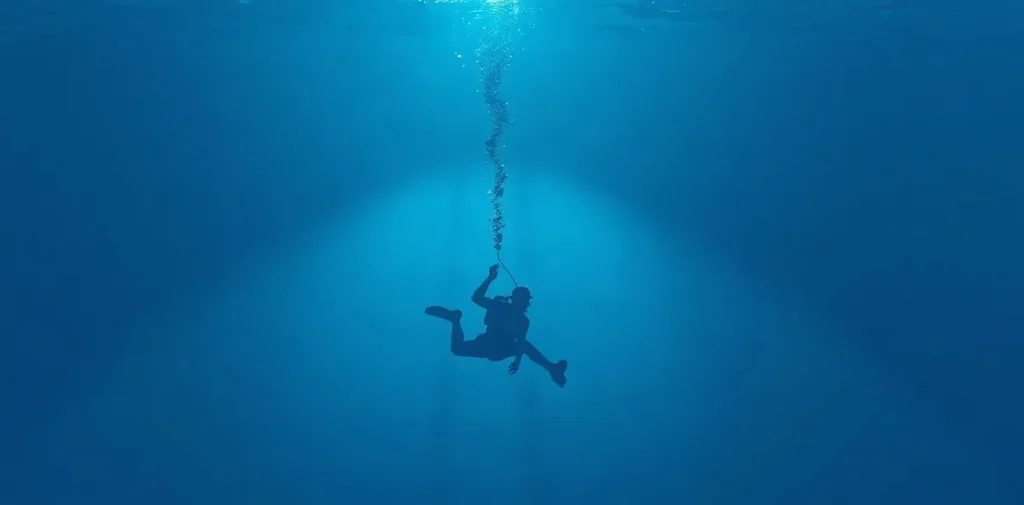
Taravana is a term associated with decompression illness after breath-hold diving. The research area asks how repeated underwater descents and ascents, despite no breathing from a tank, may expose divers to decompression stress—and how clinicians should recognise and investigate resulting symptoms.
How can breath-hold diving create decompression stress?
On descent, increasing pressure compresses gas in the lungs and raises the partial pressures of gases in the blood and tissues. Nitrogen, which makes up most of the air a diver breathes at the surface, can dissolve into body tissues under pressure. During ascent, pressure falls and dissolved gas may return to the lungs or form bubbles if the change outpaces its release.
A single breath-hold dive differs from a scuba dive: the diver does not continuously breathe compressed gas underwater. But a session can involve many descents, short surface intervals and substantial depth. Repeated exposure may alter the balance between gas uptake and elimination, making the pattern of the whole session relevant, not just the deepest dive.
That distinction is central to the subject. Breath-hold diving is not automatically free of decompression risk, yet its exposure cannot simply be treated as an ordinary scuba profile. Depth, duration, repetition, recovery time and individual physiology all affect the questions a clinician or researcher must consider.
What does “taravana” describe?
Taravana is used for illness associated with breath-hold diving, particularly neurological symptoms arising after repeated dives. The term draws attention to a clinical problem, not a single diagnosis established by one symptom. Affected divers may require assessment for decompression illness, while clinicians also consider other causes of neurological or systemic illness.
Symptoms after diving can include weakness, altered sensation, difficulty with coordination, confusion or other changes in neurological function. Their timing and progression matter. Symptoms that begin during a dive or after surfacing warrant prompt attention rather than an assumption that they will resolve on their own.
The same presentation can have different explanations, and the diver’s full exposure history helps frame the assessment. A diving-medicine physician can evaluate symptoms in context; suspected serious decompression illness needs urgent medical care.
How do researchers investigate illness after breath-hold dives?
Studies in this area bring together dive exposure, symptom history and medical assessment. Researchers may examine how often divers descend, how deep and long the dives are, the surface intervals between them, and when symptoms appear. The aim is to understand which features of a dive pattern may be associated with illness, rather than assuming that one depth or one dive explains every case.
Clinical examination matters because symptoms can involve the nervous system and may evolve over time. In a research setting, careful definitions of the exposure and outcome make it possible to compare cases and distinguish a suspected decompression event from other conditions. Physiological measurements may also help investigate how pressure changes and repeated exposure affect gas exchange.
These methods have practical limits: breath-hold sessions can be difficult to reconstruct precisely, and a reported association does not by itself prove a mechanism. Combining a detailed dive history with clinical findings is therefore more informative than relying on a single feature.
Why does this matter beyond breath-hold diving?
The subject sits within the wider study of decompression illness, gas kinetics and pressure-related injury. It also challenges a common shortcut: that decompression risk belongs only to divers breathing compressed gas. Understanding breath-hold exposures helps clinicians ask better questions when a diver becomes unwell and helps researchers examine how repeated pressure cycles affect the body.
For divers, the key considerations are connected rather than isolated:
- Exposure pattern: repeated descents, depth, duration and time at the surface between dives.
- Symptom timing: when symptoms start, whether they change, and which body systems are affected.
- Clinical context: other possible causes and the need for assessment by a clinician familiar with diving medicine.
Scientific divers and clinicians also need to distinguish the risks of different kinds of underwater work. Findings from one diving mode should not be transferred casually to another; the breathing method and exposure pattern change the physiological problem being studied.
What should divers and clinicians do with suspected symptoms?
New neurological symptoms after a breath-hold diving session deserve prompt medical assessment. Do not dismiss them because the dives involved no scuba equipment or because the diver feels better temporarily. A clear account of the session—including repeated dives and surface intervals—can help clinicians assess what happened.
Research into taravana and related decompression illness is relevant to prevention as well as diagnosis. It helps define the questions that matter when evaluating repeated breath-hold exposure, while clinical decisions must be made for the individual diver. Consult a diving-medicine physician for medical guidance.
Frequently asked questions
Can decompression illness occur after breath-hold diving?
What does taravana mean?
When should a diver seek medical help?
An original research-library explainer written by the Rubicon editors. It is not a summary of a specific publication.
Related reading on Rubicon
- Understanding the Physiology of Breath-Hold Diving
- The Diving Reflex: What Happens Underwater
- Scuba Diving Fins: Split vs. Paddle Designs
- Scuba Diving Regulators: Balanced vs. Unbalanced
- Taravana and Decompression Illness After Breath-Hold Diving
- Oxygen-Enhanced Breath-Hold Diving: Research Summary
- More on Dive Medicine
- Browse the Research Library