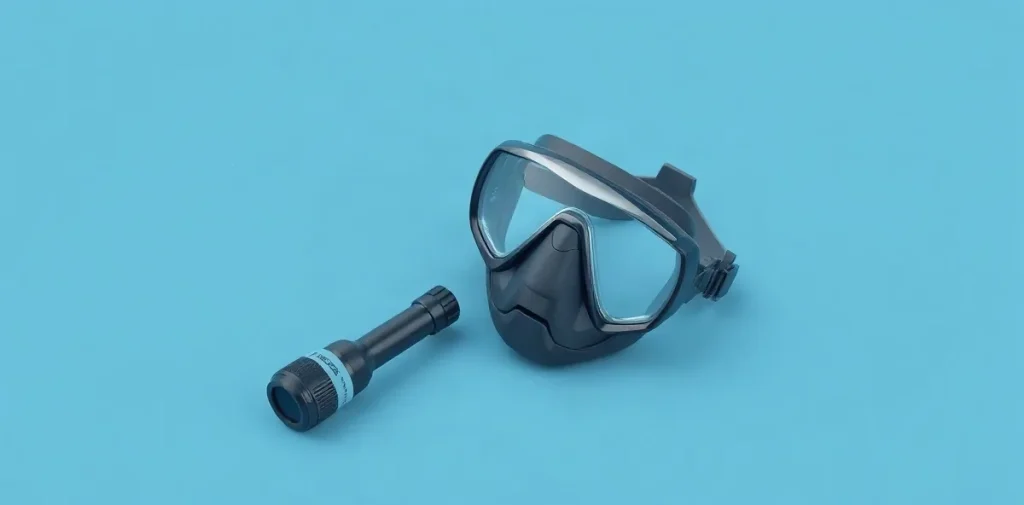
Research comparing diver breathing interfaces examines how mouthpieces and full-face masks affect breathing, gas delivery and interaction with the underwater environment. The distinction matters because the interface between diver and breathing apparatus can influence respiratory effort, communication and access to the airway during a dive.
What changes when a diver uses a different interface?
A mouthpiece is held between the teeth and lips, creating a direct connection to a regulator. A full-face mask covers the eyes, nose and mouth and connects the breathing system within the mask. Both deliver breathing gas, but their fit, internal volume and relationship to the face differ.
Breathing underwater already involves more than moving air in and out of the lungs. Gas density rises with depth, while the regulator and breathing loop impose their own resistance. The diver’s position, exertion and breathing pattern can also affect how easily gas moves.
These factors make the interface a useful subject for controlled comparison. A study can ask whether a configuration changes breathing effort or other measurable aspects of respiratory function, without treating the mask alone as the whole explanation.
What do researchers measure?
Studies of breathing systems may assess pressure changes during inhalation and exhalation, ventilation, respiratory effort or the diver’s subjective comfort. The choice of measurement depends on the question: a test of breathing resistance is not the same as a test of comfort, communication or emergency performance.
Equipment comparisons need to account for conditions that alter breathing. Water temperature, depth, workload, body position and the breathing apparatus can all affect the result. A fair comparison therefore requires a defined protocol and attention to whether the two configurations are tested under comparable conditions.
- Breathing resistance: the pressure needed to move gas through the apparatus and interface.
- Ventilation: the movement of gas into and out of the lungs.
- Fit and dead space: how the interface seals and how much exhaled gas may remain available to rebreathe.
- Task performance: how breathing equipment interacts with communication, workload and the dive’s operational demands.
Measurements made in a laboratory can isolate particular variables; in-water testing adds realism but introduces more moving parts. Neither approach answers every question, so the method must match the practical claim being examined.
Why does the breathing interface matter underwater?
Breathing resistance can become more consequential when a diver is working hard or breathing dense gas at depth. If ventilation is inadequate for the task, carbon dioxide can accumulate, contributing to headache, breathlessness, impaired judgment and, in severe cases, loss of consciousness. Equipment is one part of that risk; workload, breathing technique and individual health also matter.
A full-face mask can support communication systems and keeps the mouth and nose inside the mask, while a mouthpiece is a familiar, direct interface. Those differences may matter in scientific, occupational or cold-water diving, but suitability depends on the complete equipment system and the dive plan.
Mask choice also affects what happens when something goes wrong. A diver must be able to manage a displaced or leaking interface, respond to a gas-supply problem and follow the relevant emergency procedures. Training and compatibility with the rest of the breathing apparatus are as important as the design category.
How does this research fit into diving science?
Comparisons of breathing interfaces sit within the wider study of human performance and life-support equipment underwater. Diving physiology examines how pressure, gas density and work affect breathing; equipment research asks how regulators, masks and breathing circuits shape the diver’s exposure to those conditions.
The questions are related but distinct. A mask may change the route or mechanics of breathing, while the surrounding system determines gas supply and resistance. Researchers therefore need to distinguish interface effects from the effects of the regulator, breathing gas, depth and activity.
For diving physicians and hyperbaric clinicians, the subject connects equipment performance with respiratory symptoms and fitness to dive. A breathing complaint should not be attributed to a mask by default: the diver’s health, workload, equipment condition and environment all deserve consideration.
What should divers consider when choosing a system?
Start with the task and the equipment configuration, rather than assuming one interface is universally easier or safer. Check that the mask or mouthpiece is compatible with the breathing apparatus, fits securely and can be used as intended in the planned conditions.
Training should include the system’s normal operation and foreseeable failures. If a diver experiences unusual breathlessness, difficulty clearing the mask or other respiratory symptoms, stop diving and seek advice from a diving-medicine physician before returning to the water.
Frequently asked questions
Does a full-face mask make breathing easier?
What is breathing resistance?
When should a diver discuss breathing symptoms with a physician?
An original research-library explainer written by the Rubicon editors. It is not a summary of a specific publication.
Related reading on Rubicon
- Full-Face vs Traditional Dive Masks: Usability and Safety
- Scuba Equipment: Stop Your Mask Fogging
- Why Divers Get Cold Faster Underwater
- Scuba Diving Equipment: Essential Gear for Every Diver
- Diver Breathing: Mouthpiece vs Full-Face Mask
- Full-Face Masks and Very Shallow-Water Breathing Gear
- More on Diving Science
- Browse the Research Library