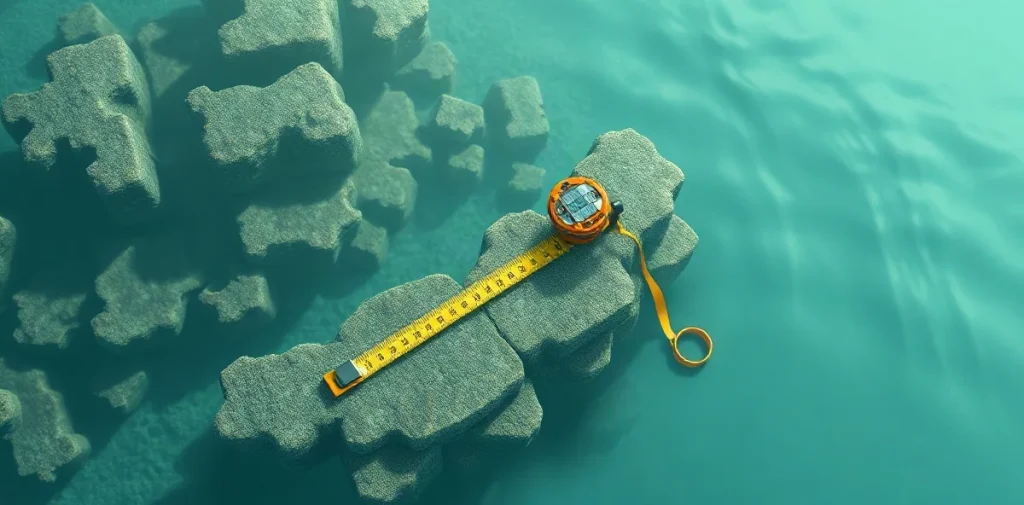
Advanced scientific diving research examines how people can work underwater to observe, measure and collect data while managing the demands of immersion. It matters because research depends on reliable observations, and those observations depend on divers, methods and equipment functioning together in a challenging environment.
What makes scientific diving a distinct research problem?
A scientific diver is not simply visiting an underwater site: the dive is part of a method for answering a research question. The work may require sustained observation, careful handling of instruments or repeated measurements, so the quality of the science depends on what can be done safely and consistently underwater.
Water changes the conditions of work. Buoyancy, visibility, current, temperature, depth and limited time underwater all affect a diver’s ability to move, communicate and use equipment. A sound research plan accounts for these constraints rather than treating the underwater setting as a neutral workplace.
That makes scientific diving an interdisciplinary field. It sits where marine and aquatic research meet diving physiology, operational planning, underwater methods and equipment design.
How do researchers make underwater observations dependable?
Underwater methods must control the difference between what researchers intend to measure and what divers can actually observe. Position, timing, visibility and the handling of instruments can affect measurements; a method therefore needs to be repeatable enough for results from different dives or observers to be compared.
Field protocols commonly define how a task is performed, what is recorded and how the team communicates. The practical question is not only whether an instrument works underwater, but whether a diver can use it accurately while maintaining awareness of the dive and the surrounding environment.
- Buoyancy and positioning: stable control helps limit disturbance to a site and supports consistent observation.
- Task loading: equipment, sampling and note-taking compete for attention and time.
- Communication: teams need procedures suited to the limits of underwater contact.
- Repeatability: clear methods make observations easier to compare across dives and researchers.
Why do physiology and dive medicine matter to field science?
Immersion and increased pressure change the body’s environment. Breathing gas is denser at depth, and the effects of pressure on gas volumes and tissues shape both the conduct of a dive and the risks that must be managed. Work underwater adds another demand: a diver may need to perform precise tasks while monitoring their own condition and the dive plan.
Physiology is therefore relevant to research design, not just emergency response. Depth, duration, exertion, thermal conditions and breathing-gas choices can influence workload and exposure. A scientific task should fit within an appropriate dive plan, with the diver’s training, equipment and health considered alongside the research objective.
General information cannot determine whether a particular person is fit for a particular dive. Questions about medical fitness, symptoms or a planned exposure should be discussed with a diving-medicine physician.
Where do specialised equipment and methods fit?
Scientific work may call for equipment selected around the task, the environment and the dive profile. Open-circuit scuba and closed-circuit rebreathers impose different operational demands; gas supply, monitoring, maintenance and diver workload all matter. A specialised system is useful only when its capabilities and limits match the work and the team can operate it competently.
Equipment also affects how a study can be carried out. A system that changes a diver’s endurance or access to a site can open research possibilities, but it does not remove the need to plan exposures, manage failures and account for the diver’s workload. Technical capability and scientific validity remain separate questions.
Training and procedures connect the equipment to the research method. Before a dive, teams need to know who performs each task, how the work will be documented and what conditions would require the task or dive to stop.
What should readers look for when evaluating this field?
Research on advanced scientific diving belongs to a wider history of using divers as observers and researchers underwater. Work on reef ecology, underwater research methods and specialised breathing systems illustrates the range of questions involved: what can be measured, how observations can be made consistently, and what equipment makes a task feasible.
When reading work in this area, distinguish its scientific question from its operational setting. Ask what is being observed, how the method controls sources of error, what demands the task places on the diver and how the procedure fits the intended exposure. Those questions help readers connect field science to the physiology and practical limits of diving.
Frequently asked questions
What is scientific diving?
Why can’t underwater research methods simply copy land-based methods?
Does specialised equipment remove the risks of a research dive?
An original research-library explainer written by the Rubicon editors. It is not a summary of a specific publication.
Related reading on Rubicon
- Scientific Diving Course: Curriculum, Skills, Certification
- The Diving Reflex: What Happens Underwater
- Scuba Diving Fins: Split vs. Paddle Designs
- Scuba Diving Regulators: Balanced vs. Unbalanced
- Advanced Scientific Diving: Research Summary
- Scientific Diving and Underwater Research: Research Summary
- More on Diving Science
- Browse the Research Library